Hacienda Quilpué, 19th century estate in San Felipe, Chile
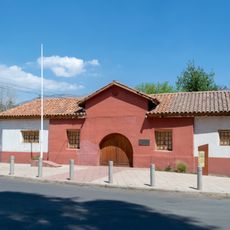
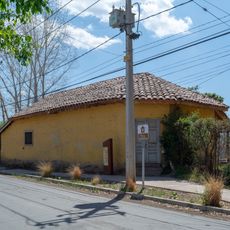
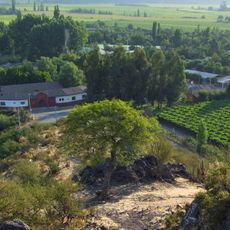
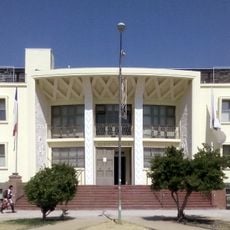
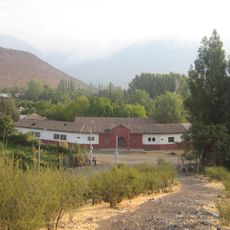
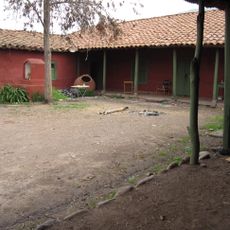
Hacienda Quilpué was an estate in the Aconcagua Valley a few kilometres from the centre of San Felipe, not in today's Quilpué. Its 1896 valuation recorded 3,920 hectares, almost all flat, of which 1,068 were irrigated. The old adobe houses with tiled corridors, probably built in the 18th century, were called the "casas viejas"; from 1892 foundations were laid for the "casas nuevas", a palace inspired by Versailles designed by Juan Eduardo Fehrman.
The estate existed in the Aconcagua Valley near San Felipe, far from today's Quilpué commune. In 1706 Andrés de Toro Cifuentes bequeathed the Estancia de Quilpué to the Mercedarian convent, and in 1740 the order ceded land for the founding of Villa de San Felipe el Real. By 1874 it belonged to Tadeo Reyes, and in 1896 it was the richest hacienda in Aconcagua province, with 3,920 hectares, 1,068 of them irrigated. Juana Ross owned it while her son Agustín Edwards Ross managed it; the new palace, begun in 1892, was completed fifteen years later by Arturo Lyon Peña, owner until 1932.
The name Quilpué comes from the colonial Estancia de Quilpué, held by the Mercedarian convent of Nuestra Señora de La Merced after Andrés de Toro Cifuentes left it to the order in his 1706 will. The estate's account books, found in a peasant house, record its running between 1892 and 1895. The Edwards family lived in Valparaíso and visited only occasionally, as absentee owners.
The hacienda stood a few blocks from the plaza of San Felipe, in the Aconcagua valley; its lands were almost entirely flat, with 1,068 of 3,920 hectares under irrigation in 1896. The old adobe houses with tiled corridors, probably built in the 18th century, were called the "casas viejas"; from 1892 ground was prepared for the "casas nuevas", the Palacio de Quilpué.
The 1896 revaluation made Quilpué the richest hacienda in Aconcagua province, with 3,920 hectares, almost all flat, a few blocks from San Felipe's plaza; 1,068 hectares were irrigated. Its buildings included barns, warehouses, workshops, a dairy and a pastería that processed grass into fodder for transport to cities.
The community of curious travelers
AroundUs brings together thousands of curated places, local tips, and hidden gems, enriched daily by 94,005 contributors worldwide.