Museo del Limarí, History museum in Ovalle, Chile.
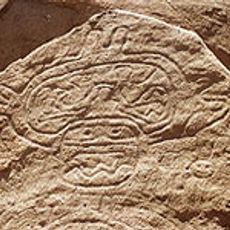
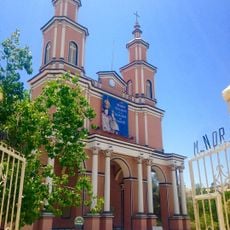
The Museo del Limarí occupies a former railway station building at the corner of Covarrubias and Antofagasta streets in Ovalle and houses archaeological collections from several pre-Hispanic cultures. The rooms display pottery, tools, and other artifacts showing how different groups lived in this area over centuries.
The Museo del Limarí was created by the Sociedad Arqueológica de Ovalle on 17 September 1963 under the name Museo Arqueológico de Ovalle, showing objects donated by Dr. Guillermo Durruty Álvarez and pre-Columbian finds from local excavations. Julio Broussain Campino was its first director. In 1979 it was transferred to the Dirección de Bibliotecas, Archivos y Museos, and in 1984 it took its current name.
The museum displays pottery from several pre-Hispanic cultures that developed in the region. The exhibited pieces show how earlier inhabitants shaped their daily surroundings and what techniques they mastered.
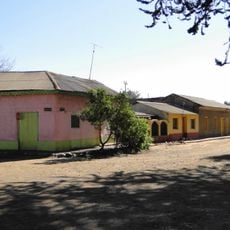
The museum sits inside the Centro Cultural Guillermo Durruty Álvarez, the former Ovalle railway station, in the city's north-central sector. The same building also holds the Víctor Domingo Silva public library, an exhibition hall and an amphitheatre, so the museum is one part of a larger complex.
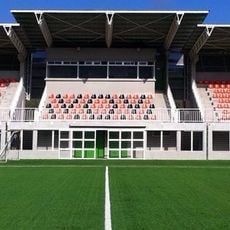
The archaeological collection was declared a National Monument on 7 May 1987. It is divided into three sections: the Diaguita Culture, with finds made at Ovalle's municipal stadium; the Durruty Collection of Diaguita ceramics; and five permanent rooms devoted to the Huentelauquén, Molle, Ánimas, Diaguita and Inca cultures.
The community of curious travelers
AroundUs brings together thousands of curated places, local tips, and hidden gems, enriched daily by 92,637 contributors worldwide.