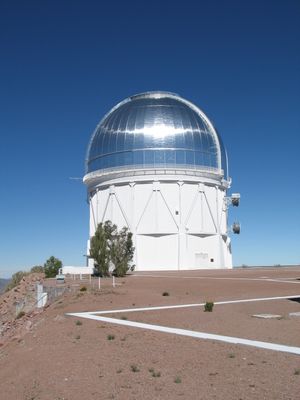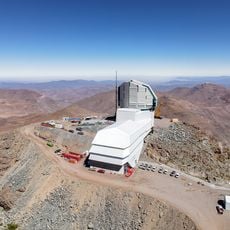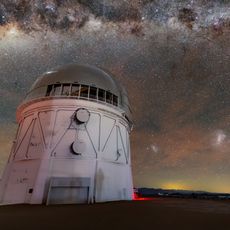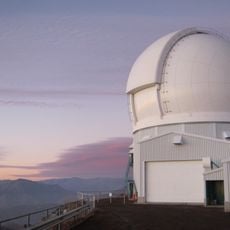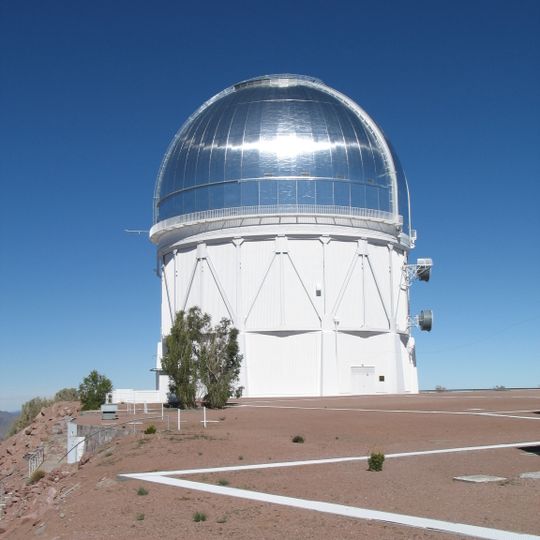
Víctor M. Blanco Telescope, Research telescope at Cerro Tololo Observatory, Chile
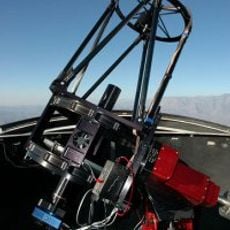
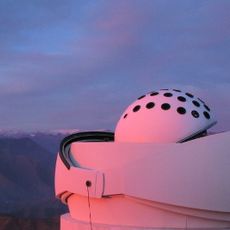
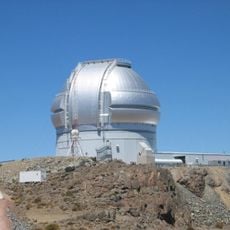
The Víctor M. Blanco Telescope is a 4-metre Ritchey-Chrétien reflector on Cerro Tololo, Chile, identical to the Mayall 4m telescope on Kitt Peak. Its primary mirror is 4 metres across and its secondary 1.3 metres. The Dark Energy Camera, its main instrument, saw first light in September 2012.
Commissioned in 1974 and completed in 1976, the Víctor M. Blanco Telescope was built as the twin of the Mayall 4-meter telescope on Kitt Peak. It remained the largest optical telescope in the Southern Hemisphere until 1998, when the first 8-meter unit of ESO's Very Large Telescope opened. In 1995 it was dedicated and named after the Puerto Rican astronomer Víctor Manuel Blanco.
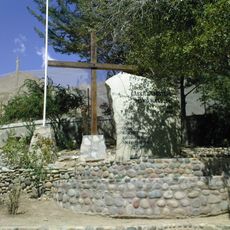
The telescope carries the name of Puerto Rican astronomer Víctor Manuel Blanco, who directed the Cerro Tololo Inter-American Observatory from 1967 to 1981. It was dedicated to him in 1995, nineteen years after completion. The Dark Energy Camera, mounted since 2012, is the instrument behind the Dark Energy Survey.
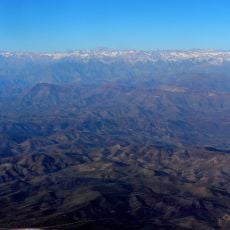
The telescope sits on a high mountain site in Chile's Atacama region, chosen for its clear and dark skies but demanding altitude and remote access. Visitors should prepare for high elevation, cold nights, and limited on-site facilities.
The telescope's Mosaic II camera, used there from 1999, was a southern-hemisphere development of the KPNO Mosaic camera installed at Kitt Peak in 1998. Both cameras carried out many astronomical surveys and were noted for their success.
The community of curious travelers
AroundUs brings together thousands of curated places, local tips, and hidden gems, enriched daily by 92,639 contributors worldwide.