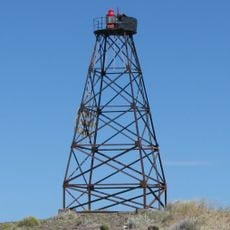
Isla de los Pájaros, Nature reserve island in Chubut, Argentina.
Isla de los Pájaros is a small island in San José Gulf, about 300 meters north-south and 200 meters east-west, near the Carlos Ameghino Isthmus. It is a piece of the Patagonian plateau cut off by erosion; at low tide a sandbar joins it to the mainland, making it a tombolo.
Fort San José stood on the nearby coast of the Ameghino Isthmus, not on the island itself. It was a Spanish colonisation attempt that was destroyed in 1810. The island was declared a protected area on 29 September 1967, and tourists may no longer land on it.
The island's name means "island of the birds", and it is the birdlife that defines it: ten species of seabirds and shorebirds nest in the surrounding waters, including Magellanic penguins, which appeared here from the late 20th century and now have more than 200 nests. South American gulls alone account for about 3,000 nests. Breeding runs from September to February, and visitors cannot land, watching instead from the mainland about 800 metres away.
Tourists cannot land on the island; observation is done from the mainland about 800 metres away, using strong binoculars or a telescope. A viewing point on the coast overlooks the island and its surroundings, and park rangers there provide information on the area's birds and plants. The birds breed between September and February.
During each tidal cycle, the site transforms from an island to a peninsula and temporarily creates paths for crabs and marine life. This constant shift between isolated and connected makes each visit a different experience depending on the tide.
The community of curious travelers
AroundUs brings together thousands of curated places, local tips, and hidden gems, enriched daily by 93,641 contributors worldwide.