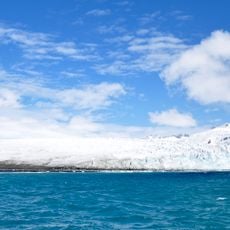
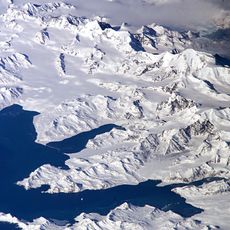
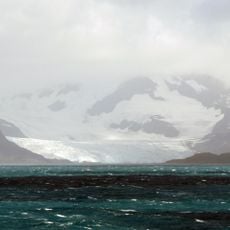
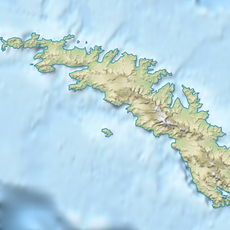
Cave Cove, Natural cove in King Haakon Bay, South Georgia and the South Sandwich Islands
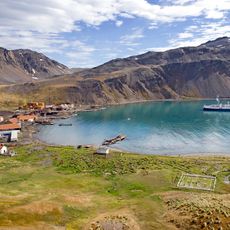
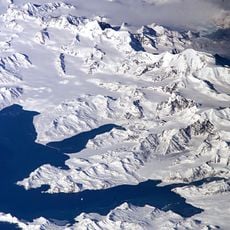
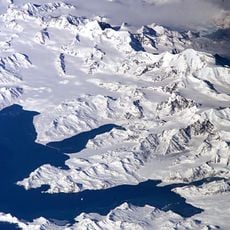
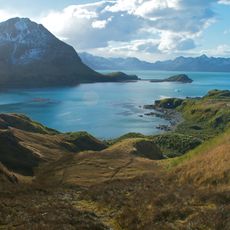
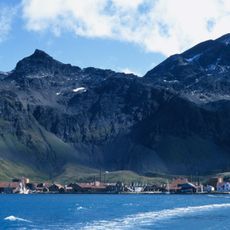
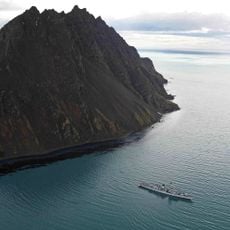
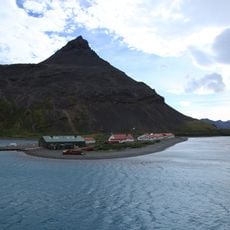
Cave Cove is a natural inlet on the southern coast of South Georgia, sheltered by towering rock faces that descend steeply to the water's edge. The cove's deep waters and protected basin make it a natural harbor in this remote region.
This cove became famous when Ernest Shackleton arrived here in 1916 during his Antarctic expedition. The landing marked a critical moment in his crew's survival journey across the Southern Ocean.
A small plaque set in the rock at the cove marks the James Caird's landing of 10 May 1916. The men named their next camp Peggotty Bluff after the Peggotty family in Charles Dickens's David Copperfield, who lived in a house made from a beached boat. Henry McNish recorded lunch of three young and one old albatross with a pint of gravy.
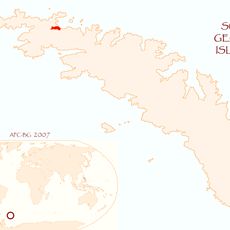
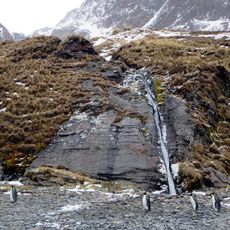
Cave Cove sits at the south end of King Haakon Bay, which is about 13 km long and 4 km wide; the cove is reached by boat, and the James Caird had to stand offshore while the men landed. A stream in the cove supplied the drinking water the party had run out of. Shackleton Gap, a mountain pass, links King Haakon Bay overland to Possession Bay.
Henry McNish's diary records the men eating three young albatrosses and one old one for lunch, with a pint of gravy he rated above any chicken soup. The party had run out of drinking water on arrival and went straight to the small stream at the cove.
The community of curious travelers
AroundUs brings together thousands of curated places, local tips, and hidden gems, enriched daily by 93,833 contributors worldwide.