Museo Zoológico Dámaso Antonio Larrañaga, Zoological museum in Buceo, Montevideo, Uruguay
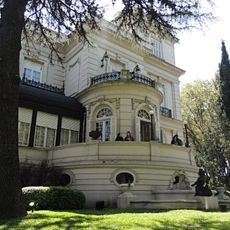
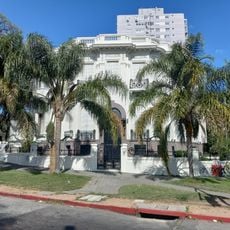
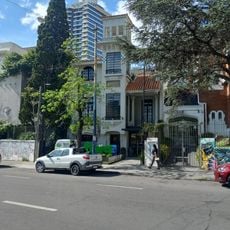
The Museo Zoológico Dámaso Antonio Larrañaga, also called Museo Oceanográfico, occupies a Moorish-style building on the Rambla República de Chile in Buceo, Montevideo. Architects Miguel Canale and José Mazzara built it between 1925 and 1930 for the businessman Visconti Romano. Its U-shaped plan has two wide wings, one for land animals and one for marine animals, around a central courtyard with a fountain.
The building was erected between 1925 and 1930 for the Italian businessman Visconti Romano, designed by architects Miguel Canale and José Mazzara in a Moorish-inspired style, on the site of the former Buceo cemetery morgue, which fell into disuse after the Faculty of Medicine opened in 1910. The venture failed, and in 1934 the Intendencia ceded it to the Servicio Oceanográfico y de Pesca, which ran an oceanographic station there until 1940. On 27 May 1956 the Concejo departamental decided to add a museum to the existing oceanographic collection, naming it after the naturalist Dámaso Antonio Larrañaga; its first director was Prof. Luis Barattini (1956–1965).
The museum is named after Dámaso Antonio Larrañaga, a Uruguayan naturalist. Its didactic role is visible in the diagrams, graphic material and the set of casts of marine mammals, described in the sources as the only one of its kind in South America. School groups are frequent visitors, and the museum also keeps a library on zoology, biology and natural history.
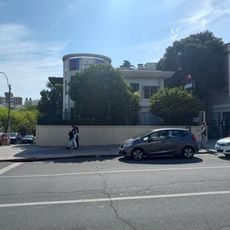
The museum stands at Rambla República de Chile 4215, in the Buceo neighbourhood of Montevideo, on the seafront along the rambla. The building is arranged in a U shape around a central courtyard with a fountain, with two large wings holding the land and marine animals. The site is reached by road along the rambla, and the seafront location gives views over the water.
The building was designed by architects Miguel Canale and José Mazzara for Italian businessman Visconti Romano, who ran cabarets downtown; his commercial venture failed and the Intendencia took it over in 1934. The museum holds 283 bird specimens, 29 reptiles, 49 mammals, 28 snail varieties and 6 arthropods, plus plaster casts of marine mammals.
The community of curious travelers
AroundUs brings together thousands of curated places, local tips, and hidden gems, enriched daily by 93,251 contributors worldwide.