Queen Mary's Peak, Mountain summit in Tristan da Cunha, United Kingdom.
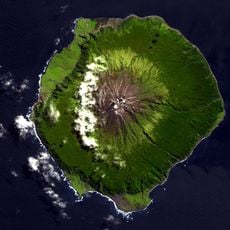
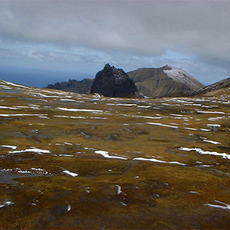
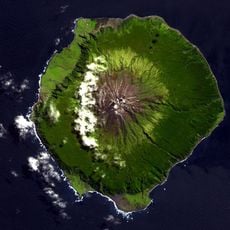
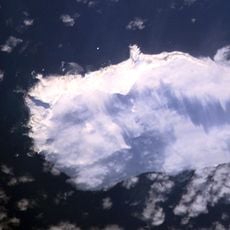
Queen Mary's Peak is the 2,062-metre summit of the active shield volcano that forms the whole of Tristan da Cunha, in the South Atlantic. A 300-metre-wide summit crater holds a heart-shaped crater lake, usually frozen in winter, and the upper slopes above the vegetation line lie under snow.
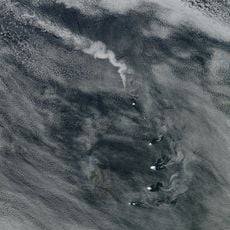
The first recorded ascent was made around 1 January 1817 by an unnamed climber, who led a second ascent on 4 January 1817 by Scottish botanist Dugald Carmichael, Dr. Evers and servants. An eruption began on 10 October 1961 from a vent on the north shore and continued into March 1962, forcing all 264 islanders to evacuate to Calshot, England; they returned in 1963. A 2004 underwater eruption, marked by an earthquake and pumice picked up by fishermen, showed the volcano is still active.
The name honours Mary of Teck, consort of King George V. Islanders long had no knowledge of earlier eruptions: they found no trace of the 18th-century activity until the 1961 vent opened. "Queen Mary's Peak" is also the brand name of Tristan da Cunha knitwear exported to New Zealand.
The climb requires a local guide and takes between five to ten hours depending on weather and fitness level. Visitors should be in good physical condition and prepared for rapidly changing conditions.
The peak is the brand name of Tristan da Cunha knitwear, which the islanders export to New Zealand. In 2004 Ellen MacArthur sighted it while sailing her record-breaking solo circumnavigation of the world.
The community of curious travelers
AroundUs brings together thousands of curated places, local tips, and hidden gems, enriched daily by 92,751 contributors worldwide.