Chest opened
+${chestReward.xp} XP
Explorer
NOUVEAU ×${chestReward.collectible.quantity}
tapez pour fermer

See the monuments around you in AR Open chests in the app

Around Us is built for your phone — point your camera at the streets and discover the monuments and places around you in augmented reality. Around Us is built for your phone — chests unlock when you walk, explore and capture nearby places.

•

Enable Location

We need your location to show you interesting places around you

Discover nearby places

Find interesting locations and hidden gems around you

Precise directions

Get accurate directions and distances to places

Your location is never shared with other users. It's only used when you tap the location button.

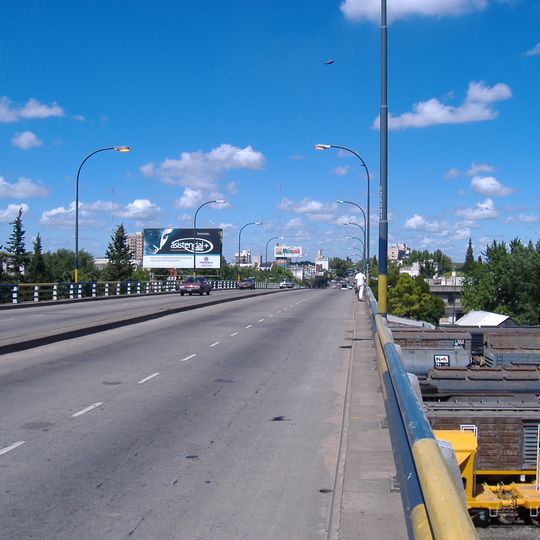
Viaducto Avellaneda

Log in to your account

Start exploring — it's free

Trusted by 92,642 travelers worldwide

Continue with Google
Continue with Apple
or

We will send you a code to connect

By continuing, you accept our Terms and Conditions and our Privacy Policy

Check your inbox

We've sent a pincode in your inbox. Please enter the code below.

Viaducto Avellaneda

Viaducto Avellaneda, Road bridge in Rosario, Argentina.

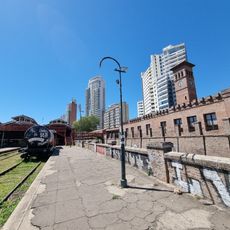
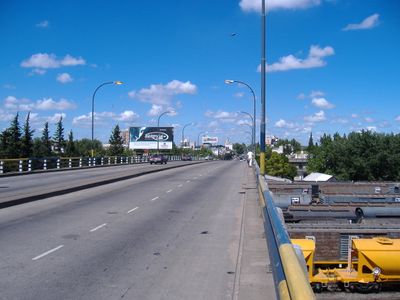
The Avellaneda Viaduct, officially Viaducto Ingeniero Emigdio Pinasco, is a road overpass on Bulevar Avellaneda above the Patio Parada yard of the General Bartolomé Mitre Railway in Rosario. It carries vehicles, pedestrians and cyclists over the tracks, linking the city centre with the northern districts.

Construction of the viaduct took place between 1968 and 1972, following agreements among the Municipality of Rosario, Argentine Railways, and the Santa Fe provincial government. The project arose from the need to create a new connection between separated areas of the city.

Opened in 1972, the viaduct took its name from Bulevar Avellaneda, the avenue it crosses. In 1991, municipal ordinance 5224 renamed it Ingeniero Emigdio Pinasco, honouring the man who had served several terms as president of the Rosario Engineers Association. Locals still commonly call it Viaducto Avellaneda.

The viaduct carries Bulevar Avellaneda over the Patio Parada yard of the General Bartolomé Mitre Railway, linking Rosario's centre with its northern districts. Before the mid-20th century the only crossings there were the Celedonio Escalada passage and the Cruce Alberdi, so this is the direct route for traffic heading north.

Before the viaduct was built, only two connections existed between the northern and central parts of the city: the Celedonio Escalada passage and the Alberdi crossing. This structure fundamentally transformed how people could move across the city.

The community of curious travelers

AroundUs brings together thousands of curated places, local tips, and hidden gems, enriched daily by 92,642 contributors worldwide.
Start exploring
Location
GPS coordinates
-32.93250,-60.67747
Latest update
October 25, 2026 03:13
Reviews
Share your experience

No review yet

Discussions
Start a discussion...

No discussion yet

« Viaducto Avellaneda - Road bridge in Rosario, Argentina » is provided by Around Us (aroundus.com). Images and texts are derived from Wikimedia project under a Creative Commons license. You are allowed to copy, distribute, and modify copies of this page, under the conditions set by the license, as long as this note is clearly visible.

Discover hidden gems everywhere you go!

From secret cafés to breathtaking viewpoints, skip the crowded tourist spots and find places that match your style. Our app makes it easy with voice search, smart filtering, route optimization, and insider tips from travelers worldwide. Download now for the complete mobile experience.
Around Us App Screenshot
❝

A unique approach to discovering new places❞

— Le Figaro

❝

All the places worth exploring❞

— France Info

❝

A tailor-made excursion in just a few clicks❞

— 20 Minutes

Around Us
Travel Guide & Maps
Download

Send to your phone

QR Code
1

Open the camera app on your mobile.

2

Point at the QR code with your camera. A notification will appear.

3

Tap the notification to open the link.