Fuerte de Santa Tecla, Colonial fortress in Bagé, Brazil
The Fuerte de Santa Tecla was an irregular pentagon fortress designed by engineer Bernardo Lecocq, with walls of rammed earth and buildings of wattle and daub. Its sides measured about 114 m north, 77 m east, 88 m south, 62 m southwest and 83 m west, surrounded by a moat 9 m wide and 2.5 m deep. Today only traces of the stone foundations remain, 500 m southwest of the Santa Tecla stream.
Built in 1774 under Spanish command, the fortress served military control along a border region. It endured multiple sieges and reconstructions before being definitively destroyed by Portuguese forces in 1801.
The fortress takes its name from Saint Thecla, reflecting the strong Catholic traditions of the colonial era in the region. This choice shows how faith and military purpose were intertwined during the settlement period.
The fortress remains are protected as cultural heritage by Brazil's National Institute for Historical and Artistic Heritage since 1970. Visitors should wear sturdy footwear as the foundations are uneven and situated along the riverbank.
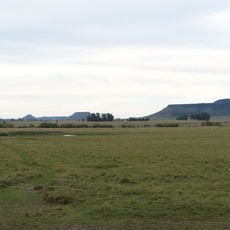
The fortress occupied a strategic location where several rivers originate, making it possible to control movements between Portuguese and Spanish territories. This position made it a crucial outpost for the powers contending over the region.
The community of curious travelers
AroundUs brings together thousands of curated places, local tips, and hidden gems, enriched daily by 92,722 contributors worldwide.