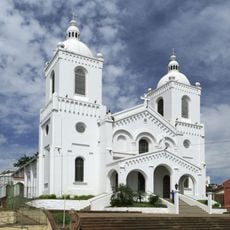
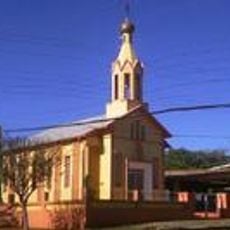
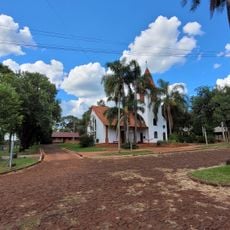
St. Anthony of Padua Cathedral, Oberá, Cathedral in Oberá, Argentina.
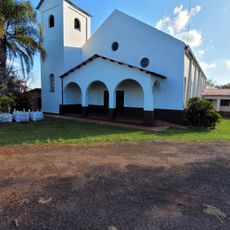
Catedral San Antonio de Padua is a church building positioned in the center of Oberá, featuring characteristic architecture that displays the region's Catholic heritage. The structure includes religious ornaments, altars, and spaces dedicated to worship.
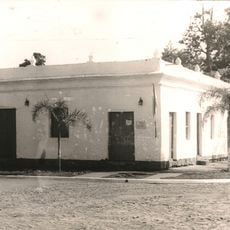
The first Catholic mass in Yerbal Viejo, later Oberá, was held in 1924 in the home of Italian immigrant Ernesto Bárbaro. A wooden chapel was built in 1934, replaced by a brick church that became a parish on 18 January 1937. The foundation stone of the current neo-Gothic church was laid on 5 December 1943 on land donated by governor Héctor Barreyro. A fire caused by fireworks destroyed it on 12 June 1986; reconstruction took 36 months and cost 589,811.24 pesos, and it was reopened in 1997. On 12 June 2009 Pope Benedict XVI created the Diocese of Oberá and the church became a cathedral.
The patron saint is St. Anthony of Padua, chosen by Italian immigrant Ernesto Bárbaro and his wife Juditta, who had prayed at Padua before emigrating and promised a homage if the journey succeeded. His feast is celebrated on 13 June, the eve of which in 1986 saw fireworks set the church alight.
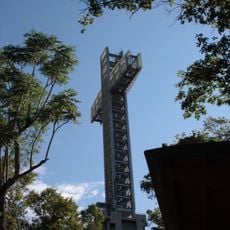
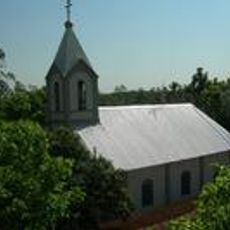
The cathedral faces the central plaza of Oberá, a short walk from the city's main commercial streets. The 40-metre tower and its Swiss clock serve as a reference point for orientation. The building is entered at ground level from the street, and the interior is used for daily Mass and for the June 13 celebrations of the patron saint.
The 40-metre tower clock came from Switzerland, donated by members of Oberá's Swiss community and installed in 1982. The church was gutted by fire on 12 June 1986, the eve of the St. Anthony festival, when pyrotechnics set it alight; only some walls survived, and reconstruction took 36 months in its first stage.
The community of curious travelers
AroundUs brings together thousands of curated places, local tips, and hidden gems, enriched daily by 92,752 contributors worldwide.