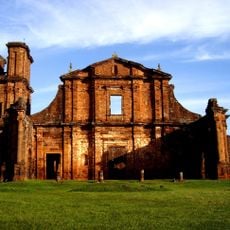
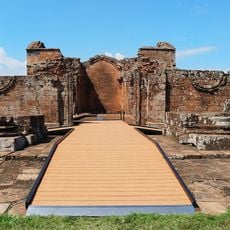
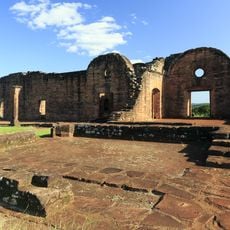
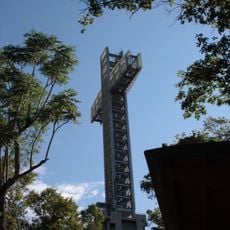
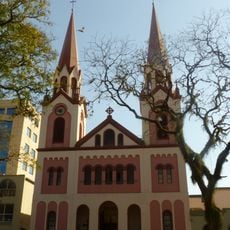
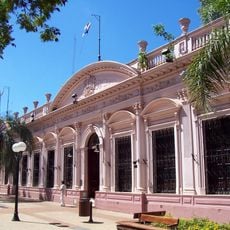
Nuestra Señora de Santa Ana, Jesuit mission ruins in Misiones Province, Argentina.
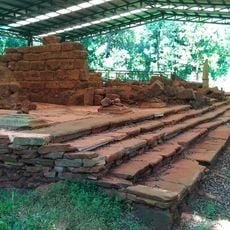
Nuestra Señora de Santa Ana is a Jesuit reduction founded in 1633, now an overgrown ruin 2 km from the town of Santa Ana in Candelaria Department, Misiones. Its layout follows the colonial model of a central square bordered by a church and administrative buildings, with stone walls and foundations visible among the vegetation.
Founded in 1633, Nuestra Señora de Santa Ana was one of the Jesuit reductions of the colonial Province of Paraguay, where the Spanish relocated Guaraní people from their home villages into mission centres laid out like Spanish rural villages around a square. The Jesuits were expelled from all Spanish dominions, including overseas territories, in 1767, and the reduction was abandoned; vegetation has since covered the ruins.
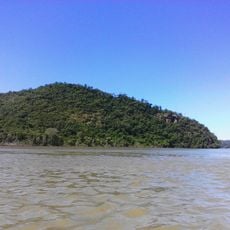
The reductions gathered the Guaraní from their home villages into grid-plan settlements modelled on Spanish rural towns, with a central square framed by the church and administrative buildings. Santa Ana lay in the colonial Province of Paraguay, and like other reductions it stood beside a waterway used for drinking water, washing, transport and trade.
The ruins lie about 2 km from Santa Ana, the main town of Candelaria Department, and close to the San Ignacio Miní reduction. The mission stood beside a waterway that supplied drinking and washing water and served transport and trade. Vegetation has overgrown much of the ruins, so expect uneven ground and dense growth underfoot.
The UNESCO listing, granted in 1984, is shared with San Ignacio Miní, Nuestra Señora de Loreto and Santa María la Mayor in Argentina, plus São Miguel das Missões in Brazil, making it a single cross-border site. Santa Ana's own ruins lie about 2 km from the town of Santa Ana and close to San Ignacio Miní.
The community of curious travelers
AroundUs brings together thousands of curated places, local tips, and hidden gems, enriched daily by 93,144 contributors worldwide.