Puerto de Posadas, River port in Posadas, Argentina.
Puerto de Posadas was the river port of Posadas, Misiones, on the left bank of the Paraná at kilometer 1583. It had two reinforced concrete piers, one high and one low, with wooden vertical fenders every five meters, and could berth vessels drawing 12 to 13 feet. Its 12,360 m² held two warehouses: one 25.50 m by 10.15 m and 5 m high (1,294 m³), the other 50.50 m by 15.25 m and 7 m high (5,385 m³).
Inaugurated in 1914 at kilometre 1583 on the left bank of the Paraná, the port was sold to the national state on 21 September 1937 by law no. 5970 for 500,000 pesos. After three decades of private operation, the state recovered it in 1940, compensated the concessionaires Aleu & Dupón and built a new pier. Around 1946 a hydroport for seaplanes to Buenos Aires opened, the last decade of heavy activity before river traffic gave way to roads and the San Roque González de Santa Cruz bridge.
Passenger launches moored at the wooden pier linked Posadas with Encarnación, Paraguay, and around 1946 a hydroport opened for seaplanes flying to Buenos Aires. The port's heyday came in the 1920s and 1930s, when more than 200 vessels used it. Truck and bus transport, then the San Roque González de Santa Cruz bridge, ended the river traffic.
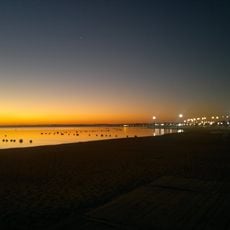
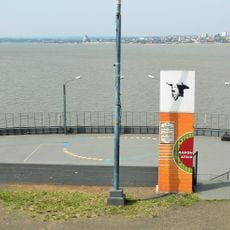
The port no longer exists: it was submerged when the Yaciretá dam raised the Paraná's level, so there are no docks or warehouses to visit. The riverside land it gained by filling with stone from Cerro Pelón now lies along Posadas's waterfront. Look for the riverbank where the two concrete piers once stood at kilometre 1583.
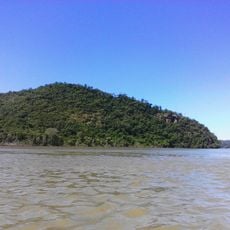
The port's construction destroyed part of Cerro Pelón hill, and the stone extracted was used to fill the coast, gaining land from the Paraná River. The port was inaugurated in 1914 at kilometre 1583 on the left bank.
The community of curious travelers
AroundUs brings together thousands of curated places, local tips, and hidden gems, enriched daily by 93,302 contributors worldwide.