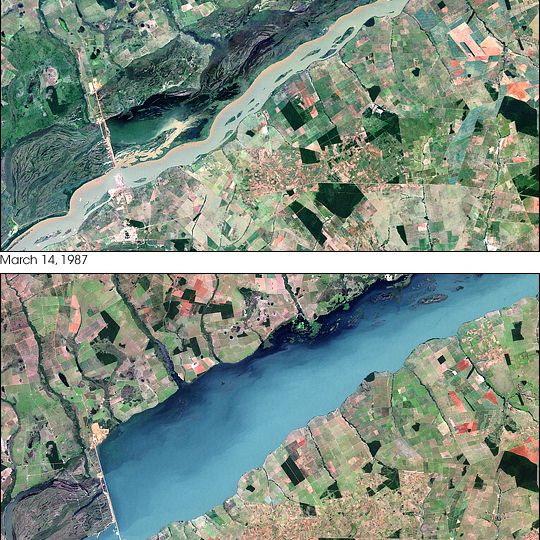
Eng Sérgio Motta Dam, Hydroelectric power station on Paraná River, São Paulo, Brazil
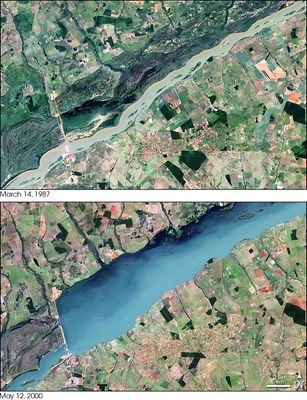
The Eng Sérgio Motta Dam extends across the Paraná River and uses 14 Kaplan turbines to generate electricity for the region. The structure incorporates a large lock system that allows ships to travel through this section of river.
Construction began in 1980 under CESP during Paulo Maluf's governorship of São Paulo, and the first reservoir filling to 253 m was completed in 1998. The dam was inaugurated in 1999 with three generators; the last of 14 Kaplan units came online in October 2003. The plant sits on the Paraná between Rosana (São Paulo) and Batayporã (Mato Grosso do Sul).
The dam is named after Sérgio Roberto Vieira da Motta, an industrial engineer from São Paulo. Its original name, Porto Primavera, is still used for the reservoir, which holds seven times the volume of Guanabara Bay and 25,000 hectares more than Itaipu's lake while generating seven times less power. The reservoir's first filling, to 253 m, was completed in December 1998.
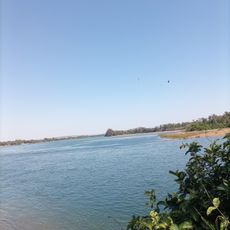
The dam and power plant are not open to visitors; the structure is best seen from public roads near Rosana, on the São Paulo bank, where the concrete crest with its yellow-topped line and the cluster of white and grey buildings stand out. The 210-metre navigation lock sits at the southern end. River levels and the reservoir's 2,250 km² surface can be checked from the banks.
The reservoir holds the invasive weed Hydrilla verticillata, first recorded in Brazil in 2005. A 520-metre fish ladder at the dam helps downstream fish reproduction, and the plant has space for four more turbines beyond its 14 Kaplan units.
The community of curious travelers
AroundUs brings together thousands of curated places, local tips, and hidden gems, enriched daily by 92,853 contributors worldwide.