Instituto de Infectologia Emilio Ribas, Public infectious diseases hospital in Jardim Paulista district, Brazil
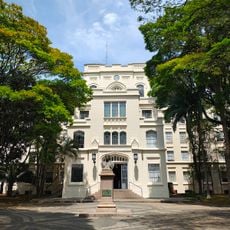
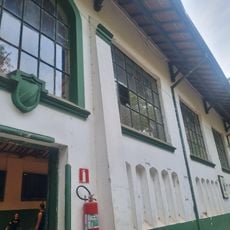
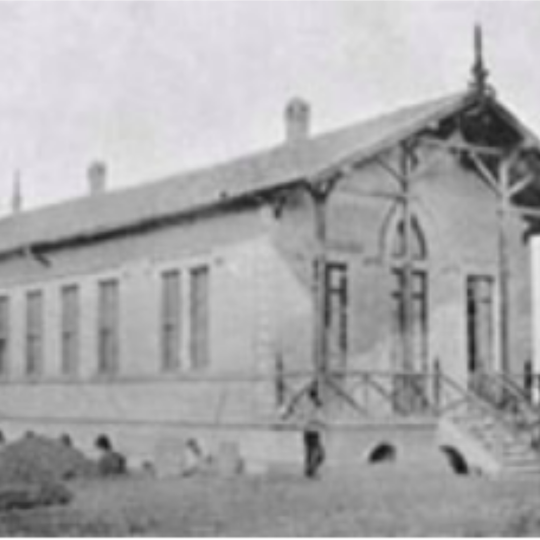
The Instituto de Infectologia Emílio Ribas is a public hospital in São Paulo, near the Clínicas metro station, with two remaining pavilions and an original gate listed at the municipal level. Its architecture followed isolation-hospital models studied by French architect Jacques Tenon. It has a second unit in Guarujá and a library with over 4,500 titles and 45,000 journal issues.
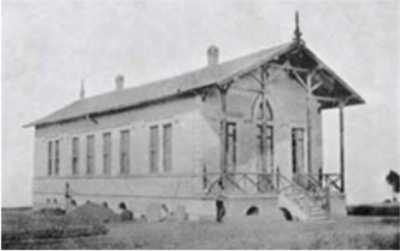
The hospital opened in 1880 as the Lazareto dos Variolosos, built on the Estrada de Pinheiros to isolate smallpox patients, and was renamed Hospital de Isolamento in 1888. In 1901 Emílio Ribas and Adolfo Lutz confirmed there the transmission of yellow fever by mosquito bites. It took the name Hospital Emílio Ribas in 1932 and its current name in 1991; in 1983 it housed Brazil's first AIDS unit.
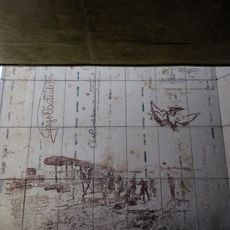
The name honours Emílio Ribas, who in 1901, with Adolfo Lutz, confirmed at this hospital that yellow fever is transmitted by mosquito bites; volunteers let infected mosquitoes bite them and three fell ill. The Centro de Estudos Emílio Ribas, a private-law association, organises much of the academic activity, and a 2005 exhibition at Sé metro station marked the institute's 125 years.
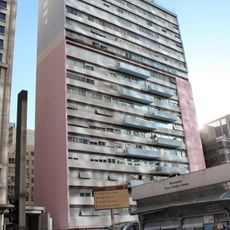
The main unit sits near the Clínicas metro station, beside the Faculdade de Medicina and the Hospital das Clínicas of USP. A second unit operates in Guarujá, in the Baixada Santista. The library is open to the public, and the Centro de Estudos Emílio Ribas runs most academic activities.
The institute's library, formally established in 1967, holds more than 4,500 book titles and 45,000 journal issues, some of them the only copies in South America, kept on paper and never digitised. It is open to the public.
The community of curious travelers
AroundUs brings together thousands of curated places, local tips, and hidden gems, enriched daily by 92,821 contributors worldwide.