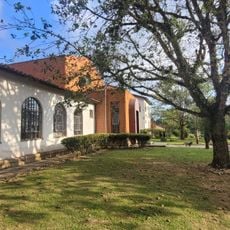
Sertanista house, Bandeirista house in Butantã District, São Paulo, Brazil.
The Sertanista House is a one-story bandeirista residence in Caxingui, Butantã District, São Paulo. Its rammed-earth walls, four-sloped roof and earthen floor follow a rigid plan with few windows; a re-entrant porch is closed on one side by a wall and on the other by a small compartment. It belongs to the Museum of the City of São Paulo.
The exact construction date is unknown; the structure points to a 17th-century bandeirista rural house, and the year 1843 is marked on the roof tiles. Architect Luís Saia linked it to a wealthy regional farmer's residence. In 1917 Alberto Christie owned the remains and sold 22 alqueires to Alberto Penteado; in 1937 Carlos Alberto de A. Prado sold the site to Cia. City de Melhoramentos, which donated it to the city in 1958.
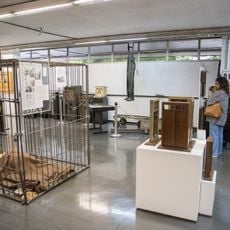
The house takes its name from the Sertanista Museum, which occupied it from 1970 to 1987 with a collection on Indigenous culture. Between 1989 and 1993 it housed the Indigenous Culture Center of the Union of Indigenous Nations, and in 2000 the Rossini Tavares de Lima Folklore Museum. It now belongs to the Museum of the City of São Paulo, which uses it for heritage education.
The house stands in Caxingui, in the Butantã district, about 150 metres from the right bank of the Pirajuçara stream, the waterway the bandeirantes used to reach the site. Visits are organised through the Museum of the City of São Paulo, which manages the building as a heritage education space.
The roof features specific construction techniques designed to direct rainwater away while keeping its original colonial characteristics. This thoughtful water management was crucial for the building's longevity and protection against moisture damage.
The community of curious travelers
AroundUs brings together thousands of curated places, local tips, and hidden gems, enriched daily by 94,226 contributors worldwide.