Parque Buenos Aires, Public park in Higienópolis, São Paulo, Brazil
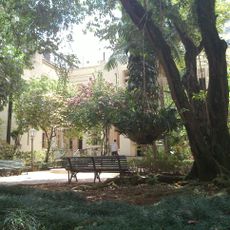
Parque Buenos Aires is a public park in Higienópolis with walking paths, exercise equipment, playgrounds, and a water feature that connect various areas. The green spaces are divided into different zones, including a designated section for dogs.
The area was expropriated by the city in 1912, and the garden was inaugurated as Praça Higienópolis on 24 September 1913, renamed Praça Buenos Aires that same year. The design by engineer-architect Heribaldo Siciliano followed English landscape-garden principles, with winding paths and informal planting. It became a park administratively in 1987, and a 1999 landscape intervention by Miranda Martinelli Magnoli recovered features of the original design.
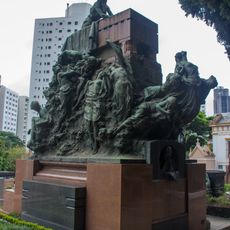
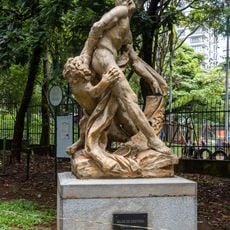
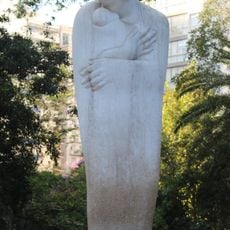
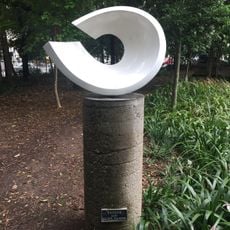
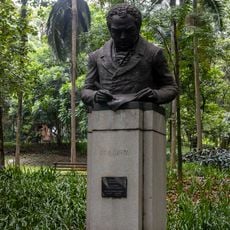
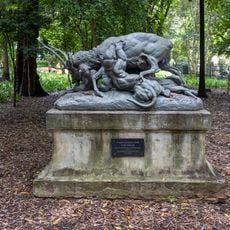
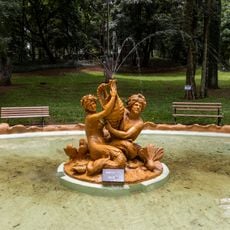
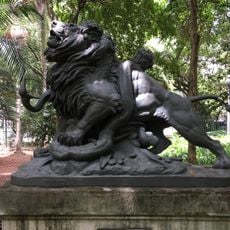
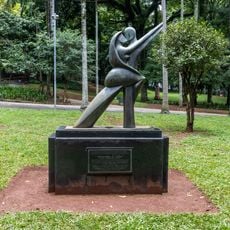
Near the main entrance stand two cast-iron groups made by the Fonderies d'Art du Val d'Osne, "Leão lutando com uma serpente" and "Veado lutando contra três tigres", bought by the city under mayor Raymundo Duprat and installed around 1920. The collection also holds Caetano Fraccaroli's "Mãe", carved from a single marble block, Roberto Vivas's bronze and granite "O Tango" (1996), a bronze copy of Lasar Segall's "Emigrantes", and the fountain crowned by "Anfitrite e Tritão".
The park occupies the block bounded by Avenida Angélica and Rua Piauí, Rua Alagoas and Rua Bahia, with its main entrance near the two cast-iron animal groups. Entrances, circulation areas, restrooms and some equipment have accessibility features. A fenced dog area, playground and outdoor gym sit alongside lawns used for picnics.
Four plant species recorded in the park are on threatened-species lists: juçara palm, pink jequitibá, Brazilwood and Paraná pine. The municipal inventory also lists 80 vascular plant species, including yellow ipê and pitanga. The park is nicknamed "Praça das Babás" by Higienópolis residents.
The community of curious travelers
AroundUs brings together thousands of curated places, local tips, and hidden gems, enriched daily by 92,781 contributors worldwide.