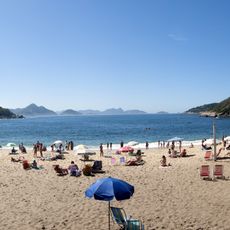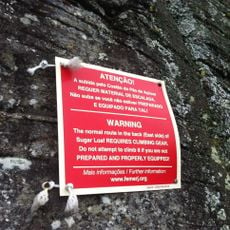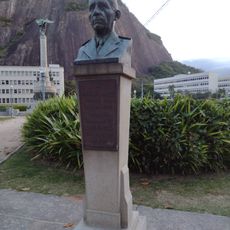
Sugarloaf Mountain, Granite and gneiss mountain in Urca, Brazil.
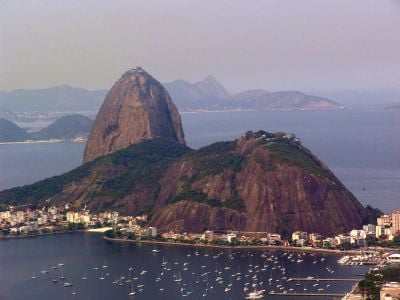
Sugarloaf Mountain is a granite and quartz bornhardt rising 396 m straight from the water on a peninsula at the mouth of Guanabara Bay in Rio de Janeiro. Its rounded, sugarloaf-shaped dome has bare grey rock on the upper faces and green vegetation on the lower slopes. The lower Morro da Urca, 220 m high, stands as a separate summit linked by cable car.
Portuguese sailors used the peak as a navigation marker when entering Guanabara Bay during the 16th century. The cable car system opened in 1912, becoming one of the first aerial tramways in the world to carry tourists to a mountain summit.
The name comes from the 16th-century Portuguese sugar trade: sugar was packed into conical clay molds to form loaves, and the peak's shape recalled them, according to historian Vieira Fazenda. Some trace it instead to the Tupi-Guarani term pau-nh-acuqua, "high hill", used by the Tamoios.
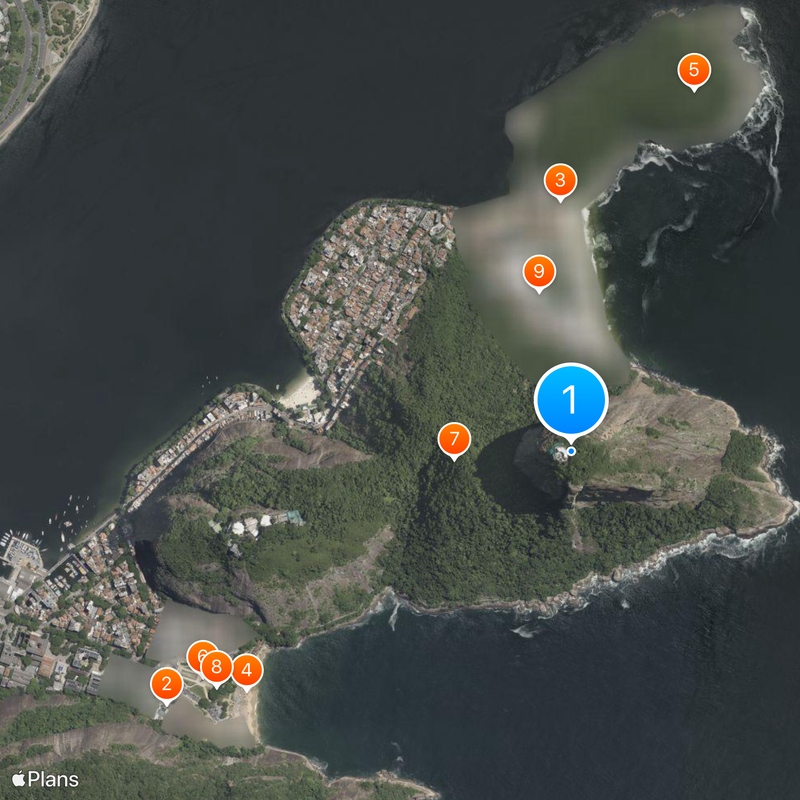
The cable car station at Urca sits at the base and can be reached by bus 513 from Botafogo or on foot from the Urca neighborhood. Early mornings and late afternoons often offer clearer air for viewing across the bay.
The cable car connects three stations across two peaks, offering shifting perspectives of Rio as you rise through different elevations. The middle station at Morro da Urca allows a walk along the summit before continuing to the higher peak.
The community of curious travelers
AroundUs brings together thousands of curated places, local tips, and hidden gems, enriched daily by 94,043 contributors worldwide.