Cassino da Urca, Former casino in Urca, Rio de Janeiro, Brazil
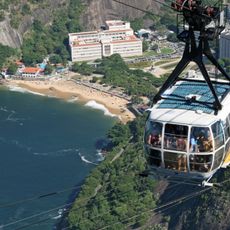
Cassino da Urca occupies a building erected in 1922 in the Urca neighborhood of Rio de Janeiro, Brazil, first used as the Hotel Balneário and converted into a casino in 1933. Its beach side was restored by the Istituto Europeo di Design, which kept the original walls and internal flooring; the Morro da Urca side holds the grill-room, the main public hall and the theatre stage.
The building opened as Hotel Balneario in the 1920s and was converted into a casino in 1933 by businessman Joaquim Rolla. A nationwide ban on gambling in 1946 forced it to close its casino operations, after which the property changed hands and purposes several times.
The venue drew some of the biggest names in Latin American and international entertainment during the 1930s and 1940s, with Carmen Miranda and Josephine Baker among those who performed on its stage. That legacy still shapes how locals and visitors think about the Urca neighborhood and its place in Rio's social history.
The building is in the Urca neighborhood, a calm area that is easy to reach by bus from central Rio de Janeiro. Since access at the waterfront level can be limited, viewing the facade from the road while also taking in the bay view is a good approach.
After the casino closed, the building housed TV Tupi's studios from 1954 to 1980, after it was bought by Diários Associados. The stage that had hosted Carmen Miranda became the recording centre for many programmes, including the long-running "Cassino do Chacrinha", for years the audience leader on Brazilian television.
The community of curious travelers
AroundUs brings together thousands of curated places, local tips, and hidden gems, enriched daily by 94,600 contributors worldwide.