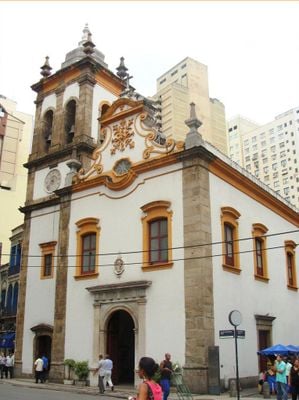
Sanctuary of Saint Rita of Cascia, Colonial church in Saúde, Brazil.
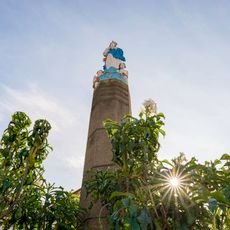
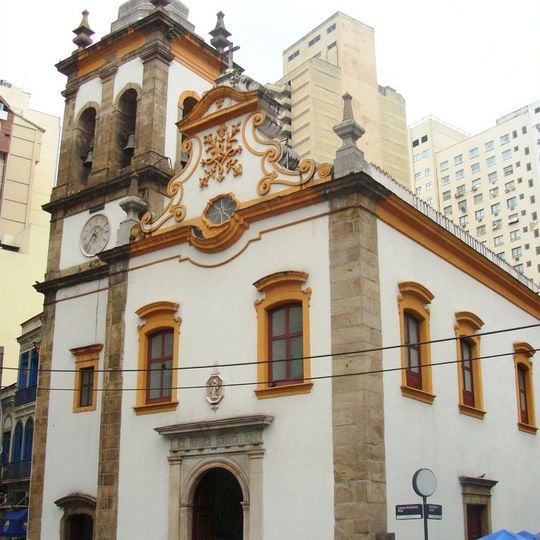
The Sanctuary of Saint Rita of Cascia has a white facade on a dark stone base, with a round-arched door framed in grey stone and a medallion of the patron saint above it. A single square bell tower stands beside the church body, holding a clock and the arches for the bells, topped by a bulbous spire with four corner pinnacles. The Rococo pediment has an oculus and volutes, and the interior is a single vaulted nave with four side altars, two carved pulpits, tile panels and an elongated chancel.
The land was bought in 1718 and the cornerstone laid in 1719 by Manoel Nascentes Pinto and his wife Antonia Maria, who kept the chapel as a private oratory during a patronage dispute with the diocese that ended in 1741. The nave was finished in 1728, as recorded on the facade, and between 1753 and 1759 the pediment, tower spire and interior carving were redone in Rococo style. IPHAN listed the church in 1938.
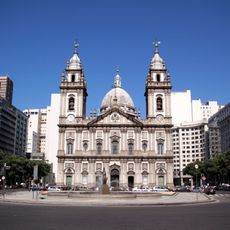
The church keeps the carved image of Saint Rita that Manoel Nascentes Pinto and Antonia Maria acquired for the chapel; it stayed in Nossa Senhora da Candelária until the building was ready. The chancel ceiling carries an early 20th-century painting of her miracles. In 2021 Saint Rita was proclaimed patron saint of downtown Rio, and in 2025 the parish became an archdiocesan shrine.
The church is easy to reach on foot from several public transit stops in the Saúde neighborhood. It remains open regularly and is still an active place of worship, so visitors should be mindful of ongoing services.
Although the building is known for its Portuguese style, local Brazilian construction techniques were used during its building, something visible in certain details of the outer walls. This combination makes it a rare example of two building traditions meeting in Rio's historic center.
The community of curious travelers
AroundUs brings together thousands of curated places, local tips, and hidden gems, enriched daily by 92,795 contributors worldwide.