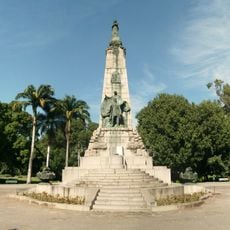
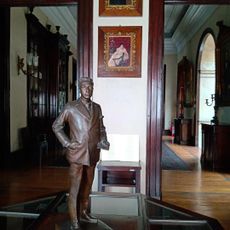
Panteão Duque de Caxias, Military memorial museum in downtown Rio de Janeiro, Brazil.
Panteão Duque de Caxias is a monument on Avenida Presidente Vargas in Rio de Janeiro, facing the Palácio Duque de Caxias. It was built to hold the remains of Luís Alves de Lima e Silva, Duke of Caxias and patron of the Brazilian army, and of his wife Ana Luísa de Loreto Carneiro Viana, Duchess of Caxias, kept in a crypt.
The monument was built to hold the remains of Luís Alves de Lima e Silva, Duke of Caxias and patron of the Brazilian army, and his wife Ana Luísa de Loreto Carneiro Viana. Bad weather on 25 August 1949 cancelled the outdoor ceremonies, so only indoor rites took place while the coffins stayed under guard at the Igreja da Santa Cruz. The transfer to the crypt finally happened on 30 August 1949, with some ten thousand soldiers lining Avenida Presidente Vargas and Rio Branco.
The granite base displays two carved reliefs showing military victories from the Paraguayan War: the capture of Itororó Bridge and the army's entry into Asunción. These scenes commemorate key moments in Brazilian military history that visitors can see today.
The pantheon stands on Avenida Presidente Vargas, facing the Palácio Duque de Caxias, in the city centre. The 30 August 1949 cortège formed up from Praça da República along Avenida Presidente Vargas and Avenida Rio Branco to Rua Sete de Setembro, so the memorial is easily reached on foot from those avenues.
During its 1949 opening, three thousand doves were released and ten thousand attendees gathered, including military officers, civilians, and students from military academies. This grand celebration marked a significant moment in the city's civic life.
The community of curious travelers
AroundUs brings together thousands of curated places, local tips, and hidden gems, enriched daily by 92,869 contributors worldwide.