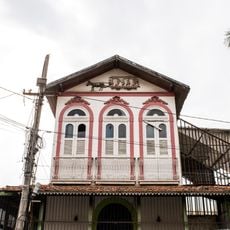
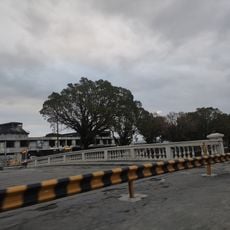
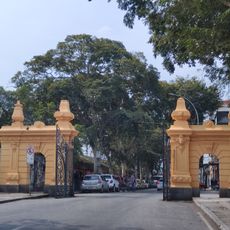
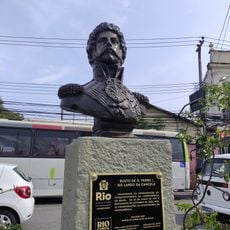
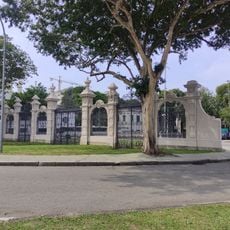
Baths of King João VI at Caju, Heritage museum in Caju, Rio de Janeiro, Brazil
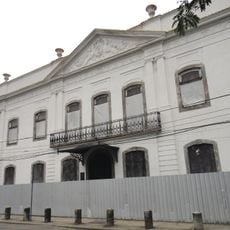
The Baths of King João VI is a nine-room early 19th-century mansion with a veranda on Praia do Caju, owned by coffee merchant Antonio Tavares Guerra. It became known as Chácara Imperial Quinta do Caju after Dom João VI used the spot for sea bathing. Since 1996 the building has housed the Museu da Limpeza Urbana, closed to visitors since 2012.
The house was built in the early 19th century for the coffee merchant Antonio Tavares Guerra. After the Portuguese royal family settled in Rio, João VI used it for sea bathing on medical advice, to treat an infection caused by a tick bite, and it became known as the Chácara Imperial Quinta do Caju. It was listed by SPHAN in 1938, restored in 1985, and restored again in 1996 with Comlurb, when it became the Museu da Limpeza Urbana. It closed to visitors in 2012 for lack of funds.
The house owes its name to King João VI, who bathed in the sea at Caju on medical advice to treat an infection caused by a tick bite. The area was then a bathing resort on a still-unpolluted Guanabara Bay, and the mansion became known as Chácara Imperial Quinta do Caju. Since 1996 it has housed the Museu da Limpeza Urbana, with objects and documents on the history of waste collection in Rio.
The house stands at 385 Praia do Caju, in the Caju neighbourhood on Guanabara Bay. The museum has been closed to visitors since 2012 for lack of funds, so check locally before travelling; the building is a listed heritage asset and has been left abandoned.
The house belonged to coffee merchant Antonio Tavares Guerra before it became known as Chácara Imperial Quinta do Caju. Dom João VI's sea bathing there followed a medical recommendation to treat an infection caused by a tick bite. The building was listed by SPHAN in 1938 and later housed the Museu da Limpeza Urbana, closed to visitors since 2012.
The community of curious travelers
AroundUs brings together thousands of curated places, local tips, and hidden gems, enriched daily by 93,431 contributors worldwide.