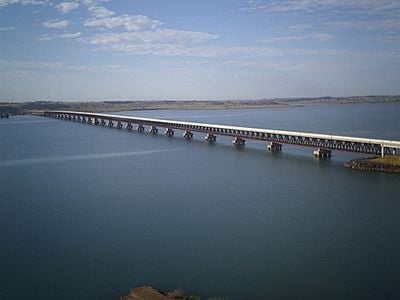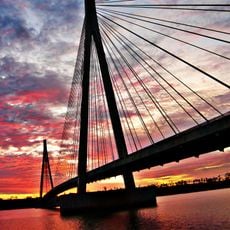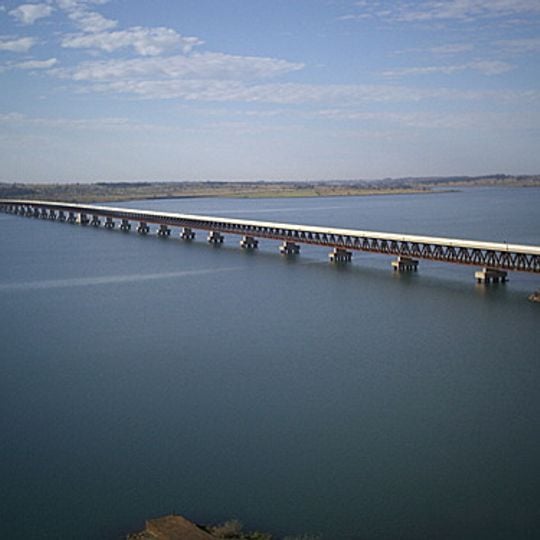
Rollemberg–Vuolo Road–Railway Bridge, Road-rail bridge between Aparecida do Taboado and Rubineia, Brazil.
The Rollemberg-Vuolo Bridge connects Mato Grosso do Sul and São Paulo across the Paraná River with a double-deck design that accommodates both road and rail traffic. Steel trusses support the structure, with vehicles traveling on the upper level while trains run on the lower deck.
The bridge opened in 1998 after major investment and replaced the previous ferry service that connected the two states. This completion marked a major shift in regional transport, establishing a permanent crossing where water transport once dominated.
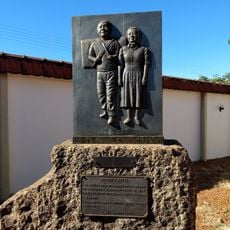
The road section is named for deputy Roberto do Valle Rollemberg and the railway section for senator Vicente Emílio Vuolo, both leading advocates of the crossing. Euclides da Cunha had already argued for a bridge here in 1901, along the old Boiadeira do Taboado road. When work stopped in 1995, Vuolo published a manifesto titled "Paralisar a Ponte Rodoferroviária é um Crime Doloso", which was debated in the Chamber of Deputies.
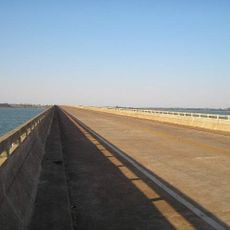
The bridge carries pedestrians, cyclists, motorcycles, cars and freight trains, with road traffic on the upper deck and rail below. A vehicle crossing takes under five minutes, replacing ferries that could take up to an hour and a half when weather allowed. Maintenance and safety are handled by the National Land Transport Agency, while the railway operates under a concession held by ALL Rumo.
The structure allows three transportation modes to cross the same river: cars on the upper level, trains below, and barges passing underneath. This layered arrangement is rare in Brazilian infrastructure and creates an unusual engineering solution for regional connectivity.
The community of curious travelers
AroundUs brings together thousands of curated places, local tips, and hidden gems, enriched daily by 93,685 contributors worldwide.