Sanctuary of Bom Jesus de Matosinhos, Religious sanctuary and UNESCO site in Congonhas, Brazil
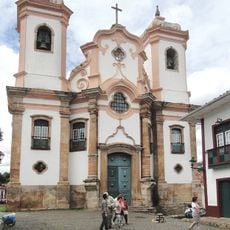
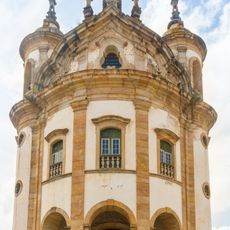
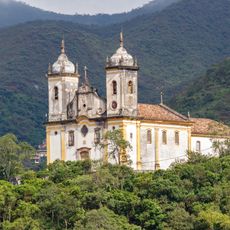
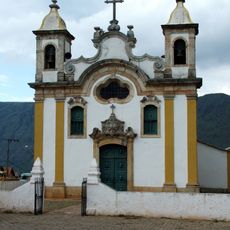
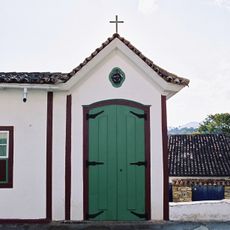
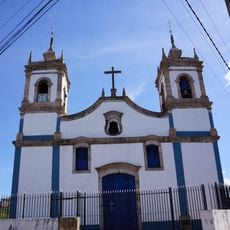
The Sanctuary of Bom Jesus de Matosinhos is a church with a white facade, two towers topped by domes and crosses, and a gabled central section with a dark blue arched doorway. On the grassy slope in front stand six small white chapels with domed roofs, each topped with a cross. The forecourt holds twelve soapstone prophet statues, and a tall white antenna mast stands to the right.
In 1757 the Portuguese miner Feliciano Mendes, gravely ill, raised a cross on the Morro Maranhão and lived there as a hermit, donating his gold and collected alms to build a church. Works began that year with the main chapel, directed by master masons Domingos Antônio Dantas and Antônio Rodrigues Falcado; the towers were added between 1765 and 1776. The complex was built in stages until 1875, listed by SPHAN in 1939 and made a World Heritage Site in 1985.
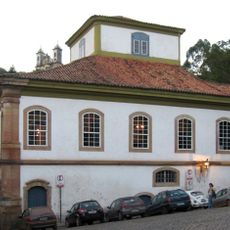
The name comes from Matosinhos in Portugal, where a crucifix said to have been carved by Nicodemus washed ashore in 124. The annual Bom Jesus jubilee runs from 7 to 14 September, when miners and pilgrims come to honour the Senhor de Matosinhos. The Casa dos Milagres holds a large collection of ex-votos left by grateful devotees.
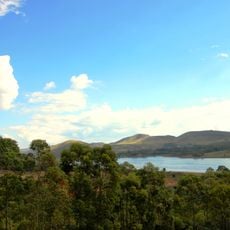
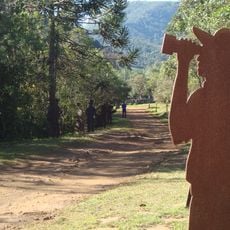
The sanctuary is walkable, with staircases and pathways running along a hillside, so comfortable shoes are recommended. Access to the chapels is generally straightforward, though the site can be challenging during extreme heat or heavy rain.
The forecourt holds twelve soapstone prophets carved by Aleijadinho and his assistants, the core of his sculptural legacy. The church was raised to the rank of minor basilica by Pope Pius XII on 26 July 1957. The sanctuary also keeps a large collection of ex-votos in the Casa dos Milagres.
The community of curious travelers
AroundUs brings together thousands of curated places, local tips, and hidden gems, enriched daily by 92,619 contributors worldwide.