Rio Doce State Park, State park and Ramsar wetland in Minas Gerais, Brazil
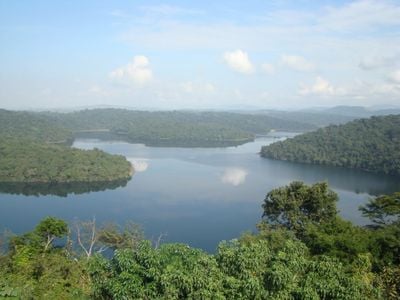
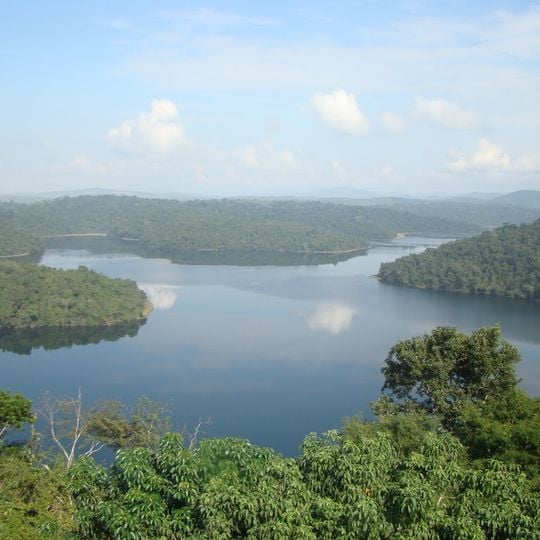
Rio Doce State Park covers 35,970 hectares across Marliéria, Dionísio and Timóteo, bounded by the Doce River to the east and the Piracicaba to the north. Its forty natural lagoons, lying 20 metres above the river and unconnected to it, include Lagoa Dom Helvécio, 6.7 square kilometres wide and up to 32.5 metres deep. Dense seasonal semideciduous Atlantic Forest surrounds the dark water.
The conservation area was established in 1944 and became the first state-level protected zone in the region at that time. Its creation was part of an early effort to preserve Atlantic Forest landscapes.
The Borun, called Botocudos by Europeans, lived in the area before Portuguese colonization. The park's name comes from the Doce River, which forms its eastern boundary. The Lagoa Dom Helvécio is also called Bishop's Lagoon after Dom Helvécio Gomes de Oliveira, the archbishop who campaigned for the reserve.
The park is open Tuesday through Sunday and offers visitors facilities including dining and overnight accommodation. Boat trips on the lakes are available, allowing guests to explore the water more closely.
Lagoa Dom Helvécio, the only lagoon open to visitors, is the largest natural lagoon in Brazil, covering 6.7 km² with a maximum depth of 32.5 m. Its shoreline lies 20 m above the Doce River and has no connection to the river system. The lagoon is also called Bishop's Lagoon, after Dom Helvécio Gomes de Oliveira, the archbishop who campaigned for the park's creation.
The community of curious travelers
AroundUs brings together thousands of curated places, local tips, and hidden gems, enriched daily by 92,836 contributors worldwide.