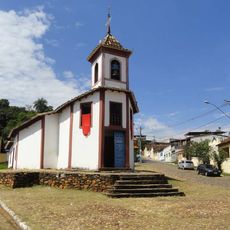
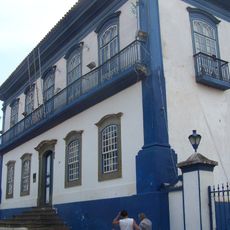
Matriz de Santa Luzia, Colonial church in Santa Luzia, Brazil.
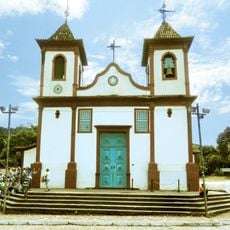
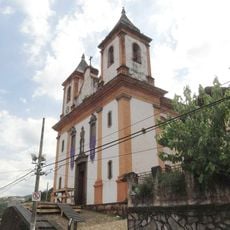
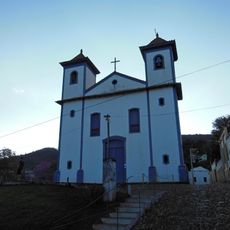
The Matriz de Santa Luzia stands at the top of Rua Direita in the historic centre of Santa Luzia. Two tall square towers with pyramid-shaped cupolas and pyramidal pinnacles flank a nearly straight gable topped by a small cross, with a round oculus below it. The interior has a barrel-vaulted wooden ceiling painted with a figure of Our Lady, six side altars and a chancel framed by tribunes reached by a steep staircase behind the altar.
A 1761 petition already mentions two large temples in the settlement, so the 1774 date likely refers to finishing or rebuilding work rather than the first construction. Sergeant-major Joaquim Pacheco Ribeiro, a Portuguese-born officer, promoted the church's construction as thanks for a grace received. In the Liberal Revolution of 1842, whose final battle in Minas Gerais was fought at Santa Luzia, the church sheltered the rebels.
The church is dedicated to Saint Lucy and gives its name to the town of Santa Luzia. Its interior mixes phases of Minas Gerais baroque: the main altarpiece is a baldachin with marbled twisted columns, carved angels and figures of the Holy Trinity above the curtain. Four paintings over the side-corridor doors show the Evangelists, and the doors themselves are painted to imitate marble.
The church opens regularly for visitors and continues to serve as an active place of worship in the town center. Since it remains a functioning sacred space, checking service times before visiting helps you plan your visit better.
The main altarpiece is a canopy retable with twisted, marbled columns wreathed in foliage, topped by carved figures of the Holy Trinity and flanked by niches with angels. In 2006 three angel images were returned to the church; they had been sold by a caretaker in the late 1950s and were about to be auctioned in Rio de Janeiro.
The community of curious travelers
AroundUs brings together thousands of curated places, local tips, and hidden gems, enriched daily by 94,341 contributors worldwide.