Parque Metropolitano de Pituaçu, Urban park in Salvador, Brazil
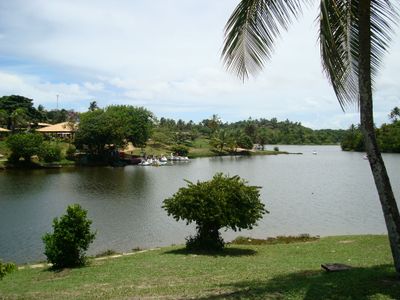
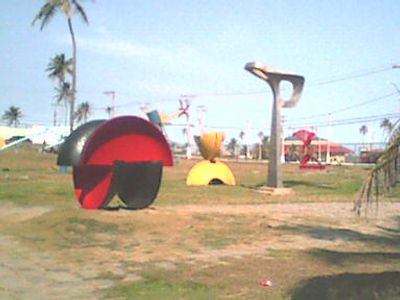
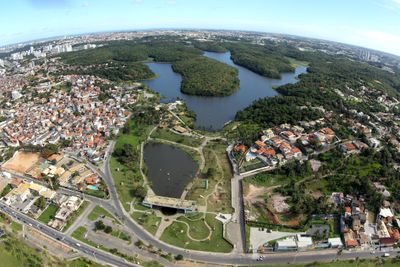
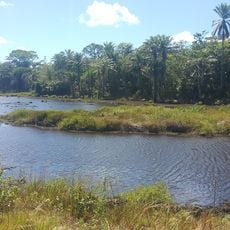
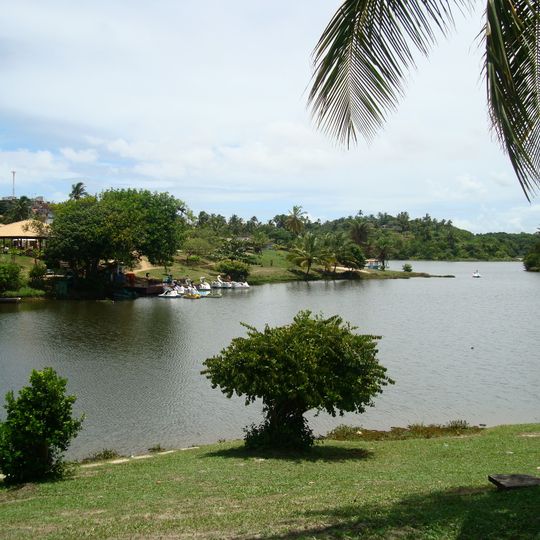
Parque Metropolitano de Pituaçu is a 425-hectare urban park in Salvador, Bahia, built around the 200-hectare Lagoa de Pituaçu. Its lawns slope down to the water, where pedal boats are moored by a low retaining wall near a sandy bank. The Espaço Mário Cravo, a 53,000-square-metre open-air sculpture park, displays works by Mário Cravo Júnior.
The Pituaçu Lagoon was formed artificially in 1906 by damming the Pituaçu River to supply water to Salvador. The park was created by State Decree No. 23,666 of 4 September 1973, during Roberto Santos's state government, and Decree No. 23,113 of 12 April 1978 declared the land's public utility for expropriations, initially covering 660 hectares. It now occupies 425 hectares.
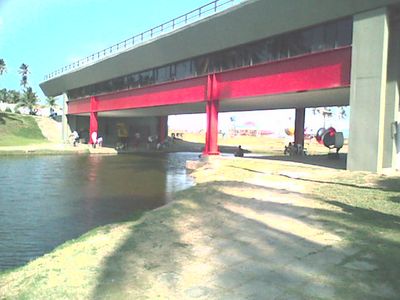
The Espaço Mário Cravo, also called Parque das Esculturas, covers 53,000 square metres inside the park and holds a permanent open-air display of sculptures by the Bahian artist Mário Cravo Júnior, plus an art centre. His studio occupies the building at the park entrance facing the waterfront. The area is managed by the Fundação Mario Cravo with the state government.
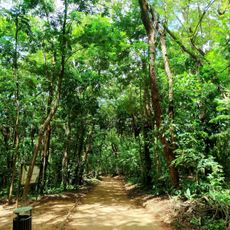
The cycle lane runs 15 km, mostly along the Pituaçu Lagoon shore and cutting across its two largest peninsulas, with signage, five kiosks and support points; a bike rack for rentals sits at its start near Espaço Mário Cravo. The park closes at 18:00 on Saturdays, but escorted night rides, Pedal da Lua, run on the Saturdays before a full moon with the environmental police (COPPA).
The lake within the park covers around 200 hectares and represents the largest water body in Salvador's metropolitan region. This body of water serves visitors for recreation while also supporting the local ecosystem.
The community of curious travelers
AroundUs brings together thousands of curated places, local tips, and hidden gems, enriched daily by 94,082 contributors worldwide.