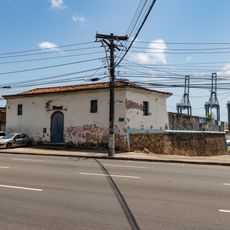
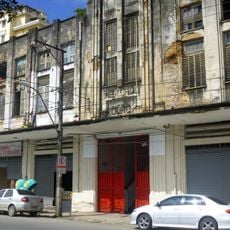
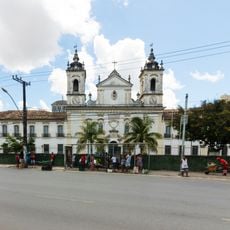
Port of Salvador, Maritime port in Salvador, Brazil
The Port of Salvador is a maritime facility along All Saints Bay with two access channels that accommodate ocean vessels in depths between 9 and 12 meters. The facility operates multiple terminals that process cargo and handle international cruise ship traffic.
Europeans first sighted the bay in 1502 during Amerigo Vespucci's 1501-1502 expedition, but the port's operations date from 1816. Salvador, founded in 1549 by governor-general Tomé de Sousa, was served by a port then called Porto do Brasil. The Cais da Alfândega began in 1911, receiving the steamer Canavieiras that July, and the port was officially inaugurated on 13 May 1913.
The port's passenger terminal, rebuilt for cruise traffic, handled 148,000 passengers in the 2014/2015 season and was leased in May 2016 to the Contermas consortium for 25 years. The port links to the Pelourinho, the restored old downtown that is a UNESCO World Heritage Site and the city's cultural centre. Local merchants there stage events to draw activity to streets that stay relatively empty.
The facility connects to rail and road networks extending inland, making it accessible by multiple transport routes. Keep in mind this is an active working port, so some areas may have restricted public access.
The port is guarded by the Forte de São Marcelo, a circular fortress on a small islet in the bay, an unusual round plan among Brazilian coastal forts. The passenger terminal was auctioned in May 2016 to the Contermas consortium for 8.5 million reais on a 25-year lease. Cruise traffic rose from 148,000 passengers in 2014/2015 to a forecast 175,000 in 2016/2017.
The community of curious travelers
AroundUs brings together thousands of curated places, local tips, and hidden gems, enriched daily by 94,691 contributors worldwide.