Fort Pontael, Military fortification in Cabo de Santo Agostinho, Brazil
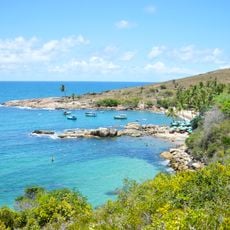
Fort Pontael, also called Castelo do Mar, lies in ruins on the southern face of Cabo de Santo Agostinho, at the pontal de Nazaré in Cabo de Santo Agostinho, Pernambuco. Its plan is an open heptagon; besides the terreplein and walls, visitors see at the entrance the ruins of the powder magazine and the troop quarters. The site is not a hilltop fort: the hilltop redoubt of Nossa Senhora de Nazaré was a separate structure.
The fort was built in the 17th century to guard a key anchorage during the Dutch invasion of Brazil. Between 1630 and 1654 it passed back and forth between Portuguese and Dutch forces.
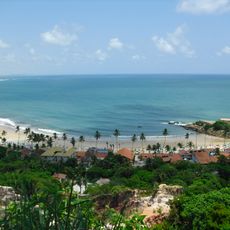
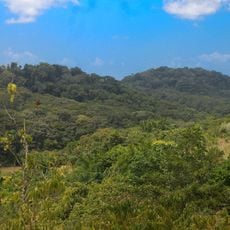
The name Nazaré ties the fort to the vila and the Reduto de Nossa Senhora de Nazaré on the hill above, a separate stronghold often confused with it. The Dutch called it Fort van der Dussen. The ruins lie within the Parque Metropolitano Armando de Holanda Cavalcanti, and the south face of the cape is where Vicente Yáñez Pinzón reached Brazil on 26 January 1500.
Access is from the village of Nazaré, at the junction of the PE-28 highway and the road to the Hotel Blue Tree Park, at the southern end of Cabo de Santo Agostinho. The ruins form an open heptagonal polygon; at the entrance stand the remains of the powder magazine and the troop barracks. The site is not a protected monument and lacks systematic consolidation works.
The Dutch renamed it Fort van der Dussen, and Adriaen van der Dussen's 1640 report counted two companies of 196 men there, with six bronze guns: two of 24 lb, two of 12 lb and two of 6 lb. Maurits of Nassau had a palisade raised around it ahead of a feared Spanish attack around 1639.
The community of curious travelers
AroundUs brings together thousands of curated places, local tips, and hidden gems, enriched daily by 93,010 contributors worldwide.