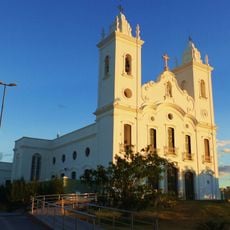
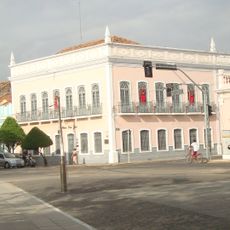
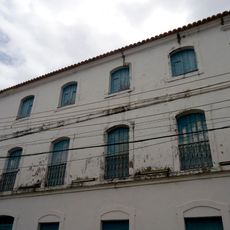
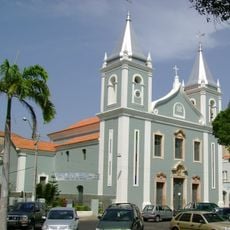
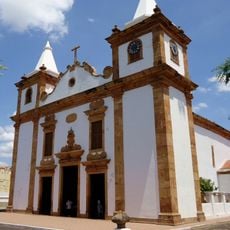
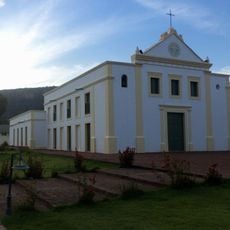
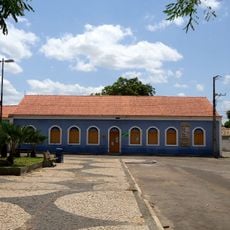
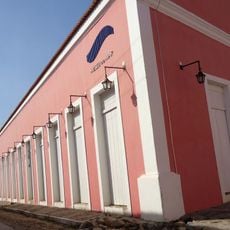
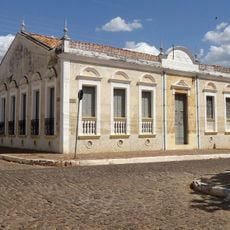
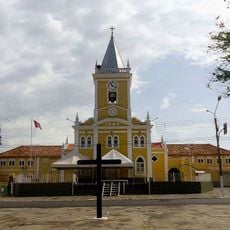
Mother Church of Our Lady of the Assumption, Colonial Catholic church in Viçosa do Ceará, Brazil.
The Mother Church of Our Lady of the Assumption is a Catholic church built in the 17th and 18th centuries by Indigenous people and Jesuits. Its central structure retains original features, including a 17th-century main altar, despite several collapses in the church body. The 2005–2006 restoration removed 1908 side altars and lowered the chancel floor, keeping the wooden steps and old floor tiles.
The church was founded in 1691 and ranks among the earliest Catholic structures in northeastern Brazil. It took shape during the period when Portuguese colonization was expanding across the region.
The church keeps the name Igreja da Ibiapaba from the colonial period, when it served the aldeia founded on 15 August 1700. Four indigenous groups lived here: the Camocins, Anacés and Ararius of the Tapuia and the Tabajaras of the Tupi. The image of Nossa Senhora da Assunção placed in the church is now in the Diocesan Museum of Sobral.
The church stands in the centre of Viçosa do Ceará, on the square of the old Ibiapaba aldeia. The 2005–2006 restoration by IPHAN and the Ceará state government removed the 1908 side altars and lowered the floor of the chancel, so the interior now differs from older photographs. Look for the original 17th-century main altar and the painted wooden ceiling panels of the chancel.
The National Institute of Historical and Artistic Heritage recognized this building as an important example of Portuguese cultural influence. This designation highlights how valuable the structure is for understanding colonial history in Brazil.
The community of curious travelers
AroundUs brings together thousands of curated places, local tips, and hidden gems, enriched daily by 92,869 contributors worldwide.