Swakopmund Jetty, pier in Namibia
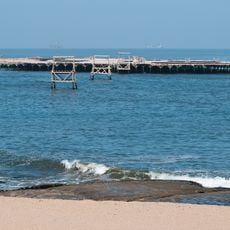
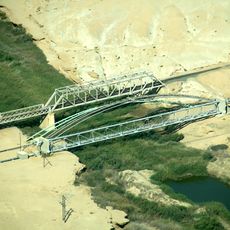
Swakopmund Jetty is a pier built from 1904 to 1905, originally 275 metres long and nine metres wide, with 60-centimetre railway tracks and six cranes. From 1912 a steel bridge was added, but World War I stopped work at 262 metres. Today a walkway leads to a viewing platform and a restaurant at the far end.
A first wooden bridge was laid on 1 September 1899 at the site of today's jetty, but it proved impractical. From 25 October 1904 a 60-man railway construction company built the present jetty, completed on 25 April 1905 at 275 metres long and nine metres wide, with 60 cm gauge rails and six cranes. A steel bridge begun in 1912 by Flander AG, Benroth and Grün & Bilfinger was cut short by World War I at 262 metres.
The pier reflects Swakopmund's past as a German colonial harbor and serves today as a gathering place for locals and visitors. People come to walk, fish, or simply watch the sea and enjoy the sunset from this public meeting spot.
The pier is freely accessible and offers a pleasant spot for walking with open ocean views. A restaurant operates at its end, and since the structure sits exposed over water, be prepared for wind and take care during rough sea conditions.
The first wooden pier, begun in 1899, proved so impractical that German engineers built a mole just north of it to establish a coastal harbour; that attempt also failed by 1902. The present jetty was then built by a 60-man railway construction company, housed in the Alte Kaserne, and completed on 25 April 1905.
The community of curious travelers
AroundUs brings together thousands of curated places, local tips, and hidden gems, enriched daily by 94,063 contributors worldwide.