Lion's Head, Mountain summit in Cape Town, South Africa.
Lion's Head is a distinctive mountain in Cape Town that rises 669 meters above sea level, with a shape resembling a lion's head when viewed from certain angles. The peak sits between Table Mountain and Signal Hill, creating a recognizable silhouette in the city's landscape.
The San and Khoikhoi lived around the peak before the Dutch landed in 1652 and named it Leeuwen Kop, seeing a crouching lion or sphinx in it and Signal Hill as its tail; the British called it Sugar Loaf. Malay settlers brought to the Cape buried their dead on the lower slopes, where historic graves and kramats remain. In 1897 gold was found and a shaft over 30 metres deep was sunk, but the grade was too low and the mine closed the next year.
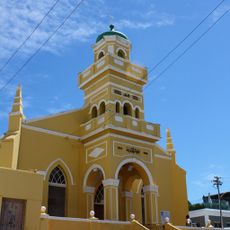
The name comes from the Dutch Leeuwen Kop, given in the 17th century because the peak and Signal Hill together resembled a crouching lion or sphinx; the English called it Sugar Loaf. The lower slopes hold historic graves and kramats (shrines) of Cape Malay leaders, and the area remains important to the Cape Malay community, whose Bo-Kaap quarter lies close by.
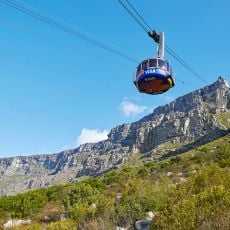
No cableway serves Lion's Head, so the summit is reached on foot; the walk up takes about an hour. Many hikers set off in the evening with torches or headlamps to watch the sunset and the lights of the city below. The slopes also serve as a launch point for paragliders.
Three vegetation types grow on the peak, all endemic to Cape Town and found nowhere else: most of the mountain is Granite Fynbos, which gives way to Peninsula Shale Renosterveld on the lower northern slopes, while a tiny patch of Sandstone Fynbos sits right on the summit.
The community of curious travelers
AroundUs brings together thousands of curated places, local tips, and hidden gems, enriched daily by 92,892 contributors worldwide.