Egyptian Building, Provincial heritage site in Cape Town, South Africa
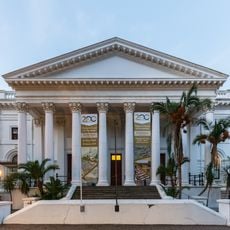
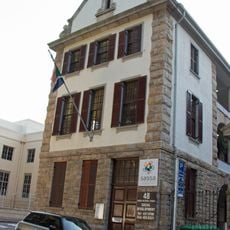
The Egyptian Building is a structure in Cape Town that features architectural elements from ancient Egypt, with intricate carvings and decorative patterns on its outer walls. The structure combines traditional European construction methods with ornamental details that reference North African designs.
The South African Athenaeum, founded on 1 October 1829 and forerunner of the University of Cape Town, was first housed in the Weeshuis orphanage at the top of Long Street. In the late 1830s Governor Sir Benjamin D'Urban granted a plot at the top of Government Avenue in Company's Garden, entered through the Leeuepoort built by Louis Thibault and Anton Anreith. Professor James Adamson sketched an Egyptian Revival design, enlarged by Col. G.G. Lewis of the Royal Engineers, and the college opened on 13 April 1841 at a cost of £3,000.
The building displays a mix of European construction techniques and Egyptian decorative elements that visitors can observe on its facades. This fusion shows how architects of that time integrated different cultures into their designs.
The building is located in central Cape Town and is surrounded by other architectural landmarks. Visitors can explore the exterior and study the facade details while walking through the neighborhood.
The site was once a zoo at the top of Government Avenue in Company's Garden, and when construction began the grounds were still ringed by abandoned animal cages. Access from Government Avenue ran through Leeuepoort, a gateway built by Louis Michel Thibault and Anton Anreith.
The community of curious travelers
AroundUs brings together thousands of curated places, local tips, and hidden gems, enriched daily by 92,935 contributors worldwide.