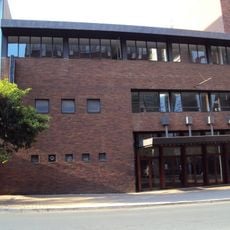
Yale-Columbia Station, South Africa
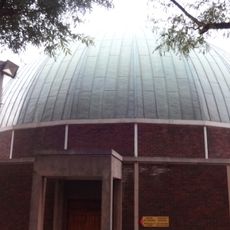
Yale-Columbia Station was an astronomical observatory in Johannesburg originally built by Yale University and later jointly operated with Columbia University. The building featured a sliding roof design and housed a 26-inch refracting telescope specifically designed to measure distances to stars through a method called parallax triangulation.
The observatory was founded in 1925 by Yale University to measure star distances through parallax measurements. After World War II, Columbia University joined the project, and operations continued until 1951 when worsening air pollution and city lights led to the closure and relocation of the telescope to Australia.
The station was a center for international scientific collaboration between American universities and South African institutions. The site shows how researchers from different countries came together to study the southern sky.
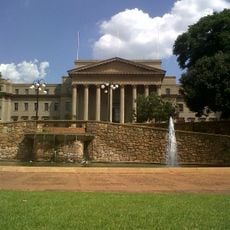
The site is located on the University of Witwatersrand campus and is easily accessible on foot. The area is best visited during early mornings or late afternoons to appreciate the quietness that surrounds this historical location.
A lunar crater was named after Harold Alden, the station's astronomer who spent decades measuring star positions and movements. This honor reflects the significance of his contributions to international astronomy.
The community of curious travelers
AroundUs brings together thousands of curated places, local tips, and hidden gems, enriched daily by 90,887 contributors worldwide.