Otjikoto Lake, Karst lake in Oshikoto Region, Namibia.
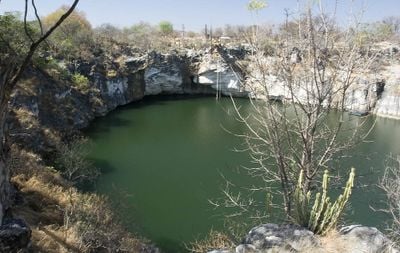
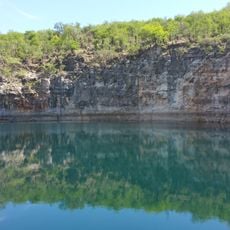
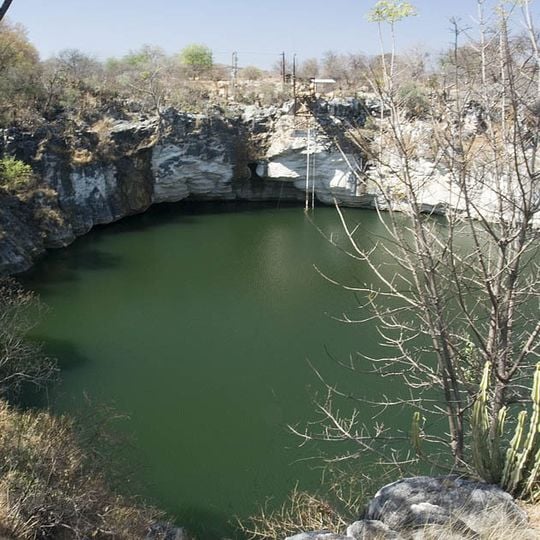
Otjikoto Lake is a sinkhole lake formed by a collapsing karst cave, about 102 metres across and roughly 100 by 150 metres in surface extent. Its still, dark greenish-grey water mirrors the cliff above and meets a low pale rock wall at the far side; no inlet, outlet or shore structure is visible.
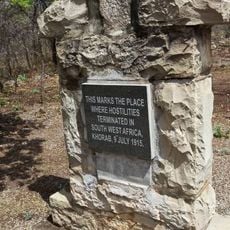
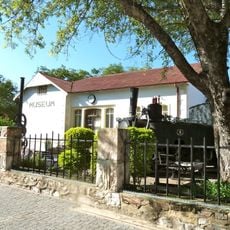
Otjikoto Lake was first reached by Europeans in 1851, when Francis Galton and Carl Johan Andersson came upon it while searching for Lake Ngami. In June 1915, retreating German Schutztruppe dumped weapons and ammunition into the water before surrendering, so the South African and British troops could not use them. Most larger pieces were later recovered and are shown in the Tsumeb Museum, though at least two cannons and quantities of ammunition remain submerged.
The San knew the lake as Gaisis, meaning "ugly"; the Herero who later moved into the area called it Otjikoto, "deep hole" in Otjiherero. Namibia's Oshikoto Region takes its name from this alternative spelling of Otjikoto. The lake is a national monument, declared in 1972.
Otjikoto Lake lies 100 metres from the B1 main road, about 20 kilometres north-west of Tsumeb, and was declared a national monument in 1972. The water surface sits below the surrounding rock, so the lake is seen from the rim rather than from a shore; two cannons and ammunition remain submerged and can be viewed only with a special diving permit.
In June 1915 German Schutztruppe troops sank weapons and ammunition here before surrendering; two cannons and quantities of ammunition remain on the lake bed and can be seen only with a special diving permit. Legend also holds that a sealed safe with six million gold marks went in, never found.
The community of curious travelers
AroundUs brings together thousands of curated places, local tips, and hidden gems, enriched daily by 93,370 contributors worldwide.