Hoba meteorite, National monument in Grootfontein, Namibia
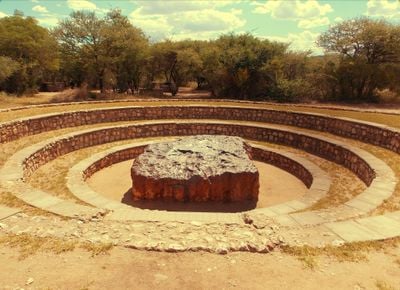
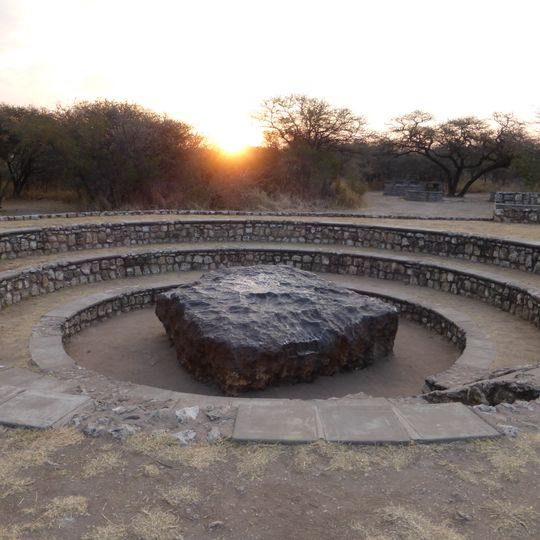
Hoba is an iron meteorite near Grootfontein in the Otjozondjupa Region. The block measures roughly 2.7 meters in length and width with a height of just under one meter and consists mainly of iron and nickel.
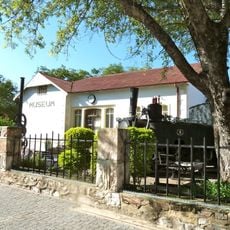
In 1920 farm owner Jacobus Hermanus Brits hit the buried mass with his plough while working a field; he heard a loud metallic scraping and the plough stopped. His report was published that year and is kept at the Grootfontein Museum. The South West African government declared the meteorite a national monument on 15 March 1955, and since 1979 the protection covers 425 m².
The name Hoba comes from a Khoekhoegowab word meaning 'gift', taken from the Hoba West farm where the mass lies. The site is a national monument, and the visitor centre built after the 1987 donation receives thousands of tourists each year.
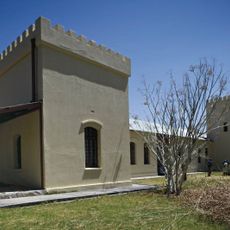
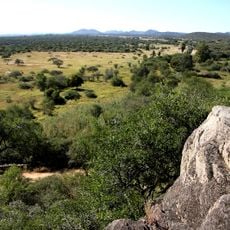
The site sits on a farm outside Grootfontein and is reached by an unpaved road. A visitor center offers information, and a stone amphitheater allows views of the meteorite from several angles.
At around 60 tons, it is the heaviest known piece of naturally occurring iron on the surface of the Earth. No one knows exactly when it fell, but estimates place the impact at roughly 80,000 years ago.
The community of curious travelers
AroundUs brings together thousands of curated places, local tips, and hidden gems, enriched daily by 94,092 contributors worldwide.