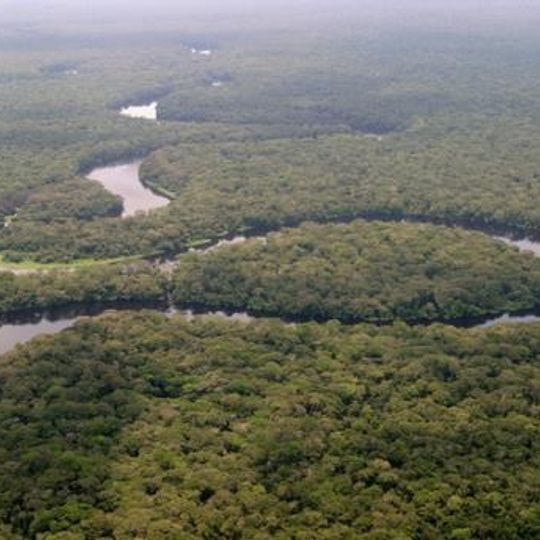
Salonga National Park, Forest national park in Congo Basin, Democratic Republic of the Congo.
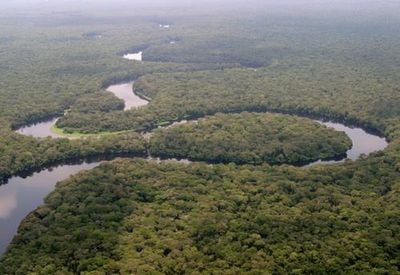
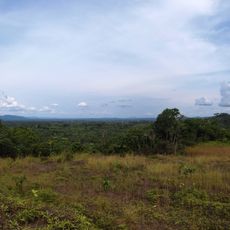
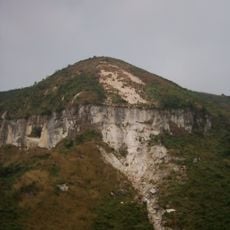
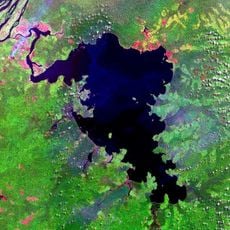
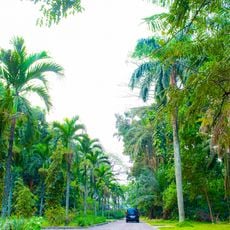
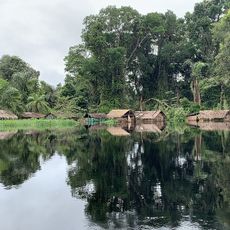
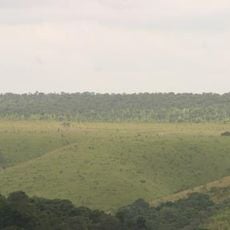
Salonga National Park is a vast forest reserve in the Congo Basin featuring networks of rivers, wetlands, and natural forest clearings throughout its territory. The landscape alternates between dense forest and more open areas shaped by water.
The reserve was first planned in the 1940s as an integral nature reserve for a remnant of equatorial forest, and was created as Tshuapa National Park in 1956. A presidential decree by Mobutu Sese Seko in 1970 gave it its present boundaries and the name Salonga, mainly to save the bonobo and the forest elephant. UNESCO inscribed it in 1984; it was added to the List of World Heritage in Danger in 1999 and removed in 2021.
Two groups live inside the park: the Iyaelima, its last remaining residents, and the Kitawalistes, a religious sect that settled there soon after its creation. Iyaelima villages serve as guard posts, and bonobo densities are highest around them because the Iyaelima do not hunt the apes. The Kitawalistes practise slash-and-burn farming, cut wood for fuel and canoes, and collect honey.
Access to the park is only by boat through river routes, as there are no roads. Visitors should prepare for long travel times and wet conditions throughout the year.
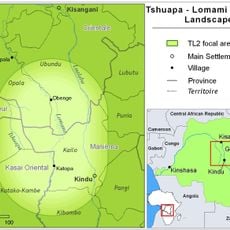
The park is split into two blocks by a 40 km-wide corridor left outside its boundaries, home to the Monkoto area's human settlements and villages built for people displaced from the park. The southern block is inhabited by the Iyaelima, whose villages double as guard posts; bonobo densities are highest around them because the Iyaelima do not hunt the apes.
The community of curious travelers
AroundUs brings together thousands of curated places, local tips, and hidden gems, enriched daily by 93,072 contributors worldwide.