Queen Elizabeth National Park, National park in Western Region, Uganda
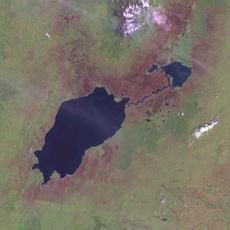
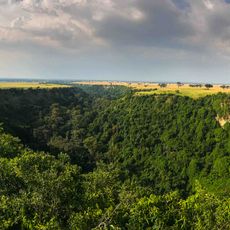
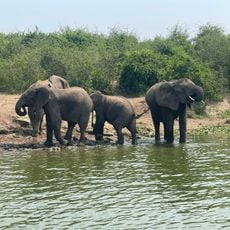
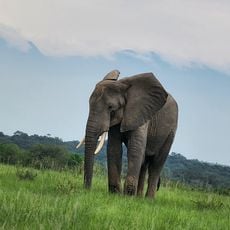
This protected area covers 1,978 square kilometers across Kasese, Kamwenge, Rubirizi, and Rukungiri districts, encompassing savannas, wetlands, and rainforests near Lake Edward. Diverse ecosystems range from grasslands to acacia woodlands and papyrus swamps along the Kazinga Channel, which connects the two major lakes within park boundaries.
Established as Kazinga National Park in 1952, the territory received its present designation in 1954 during the visit of Queen Elizabeth II of England. Subsequent expansions incorporated wildlife corridors, while armed conflicts in the 1970s and 1980s reduced animal populations before conservation efforts facilitated their recovery through reintroduction programs and enhanced protection measures.
Local communities engage in salt harvesting at Lake Katwe, an explosion crater within park boundaries, passing down traditional extraction techniques through generations. Residents of surrounding villages use controlled resource access and work with park authorities to connect wildlife corridors with agricultural lands, balancing conservation needs with livelihood requirements.
Entry fees reach 40 US dollars for international visitors, with lodging options at Mweya Safari Lodge, Ishasha Wilderness Camp, and Kyambura Tented Camp. Best visiting periods fall during dry seasons from June through September and December through February, when wildlife viewing becomes easier and roads remain accessible for safari vehicles.
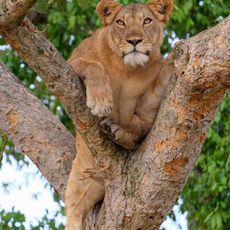
The park's lions, hyenas and leopards are monitored by the Uganda Carnivore Program and the Uganda Wildlife Authority using radio collars. In 2006 the park and neighbouring Virunga National Park were jointly designated a lion conservation unit by the IUCN, and the area is considered a potential lion stronghold in Central Africa if poaching is curbed and prey species recover.
The community of curious travelers
AroundUs brings together thousands of curated places, local tips, and hidden gems, enriched daily by 93,074 contributors worldwide.