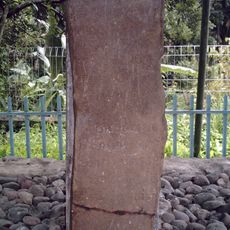
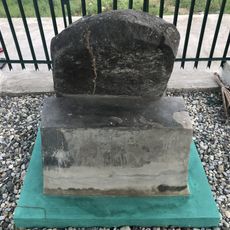
Saruaso II inscription, Ancient inscription stele in Tanjung Emas, Indonesia.
The Saruaso II stele is a stone with carvings on both sides made from brown quartz sandstone. The surface holds engraved text and decorative images that rise nearly 110 centimeters high and span about 75 centimeters wide.
Carved in the 14th century under King Adityawarman, the stele was first found on Bukit Gombak in the nagari of Baringin. It later stood in front of the Indo Jalito Building, the Dutch-era residence of the Regent of Tanah Datar where researcher L.C. Westenenk once lived, and was eventually moved to the Fort van der Capellen area. Its text records crown prince Ananggawarman succeeding his father through a hewjra ceremony.
The text is in Sanskrit written in Old Javanese script, and the same content appears on both faces with slightly different sentence structures. The front carries a snake ornament and a kala head with large fangs and a small crown; the back has a kala head shaped like an inverted urn with bulging eyes and short fangs. The opening line is a salvation prayer, followed by a chronogram (candrasangkala) that remains undeciphered.
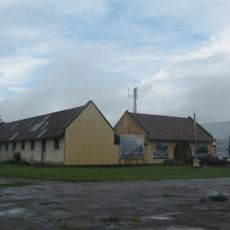
The stele sits in the courtyard of the former Monuments Preservation Department office within the Fort van der Capellen area in Batusangkar. You will find it in a protected outdoor space open during regular hours.
The Sanskrit text calls Ananggawarman a "lion-elephant" who has crossed to the far shore of courage, and names the Hevajra-tantra vow he keeps for his parents and teachers. The chronogram line that should give the year has never been deciphered, so the stone's date rests on its style and on Adityawarman's reign.
The community of curious travelers
AroundUs brings together thousands of curated places, local tips, and hidden gems, enriched daily by 94,130 contributors worldwide.