Kalijodo, Urban park in North Jakarta, Indonesia
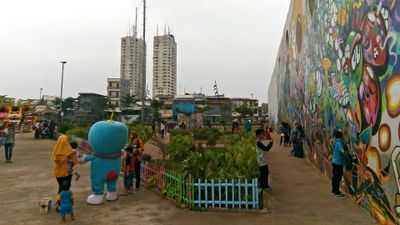
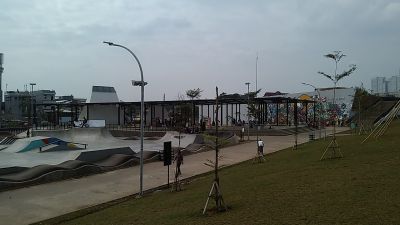
Kalijodo is an urban park in North Jakarta with separate sections for different uses: family playgrounds, an indoor football facility, and a large skate park with multiple ramps and features. The space also includes an amphitheater for events and gathering areas where locals meet throughout the week.
Kalijodo was Jakarta's oldest and largest red-light district, with about 300 buildings and more than 60 cafes and pubs housing some 3,400 residents before its demolition on 29 February 2016. The eviction involved 5,000 police, 2,500 public order officers and 400 military personnel. The park, built with corporate social responsibility funds, was inaugurated by Governor Basuki Tjahaja Purnama on 22 February 2017.
The name joins kali (river) and jodoh (soulmate), from the Peh Cun water festival held on the Angke River: young men in boats threw bean-paste cakes (tiong cu pia) to women they liked, who threw cakes back if they accepted. Mayor Sudiro banned Chinese cultural celebrations in 1958, ending the custom. A brick-and-steel well monument on the park's north side recalls the 1950s matchmaking era.
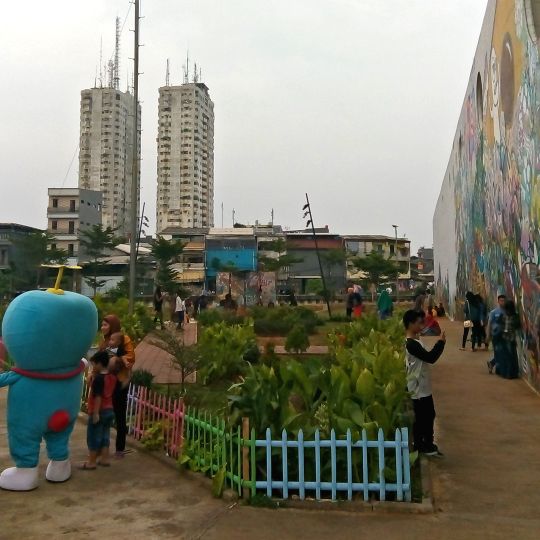
Kalijodo Park sits on Jalan Kepanduan II in Pejagalan, Penjaringan, along the west bank of the West Flood Canal. The RPTRA children's area is to the right as you enter; the open-air hall with its translucent roof and the amphitheater behind the 23-metre mural wall lie further in, and the skate park with concrete ramps and iron railings is ringed by a bicycle track. The north side holds the brick-and-steel Sumur well monument.
Four segments of the Berlin Wall stand inside Kalijodo Park, brought there after the red-light district was cleared. On the north side, a monument of brick and steel shaped like a well recalls the 1950s, when the site was known as a place to find a soulmate; its form follows the Sanskrit lingam-yoni idea of fertility.
The community of curious travelers
AroundUs brings together thousands of curated places, local tips, and hidden gems, enriched daily by 93,309 contributors worldwide.