Gelora 10 November Stadium, Multi-purpose stadium in Tambaksari, Indonesia
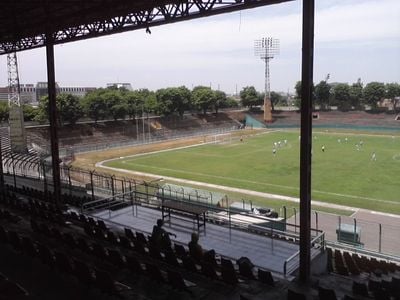
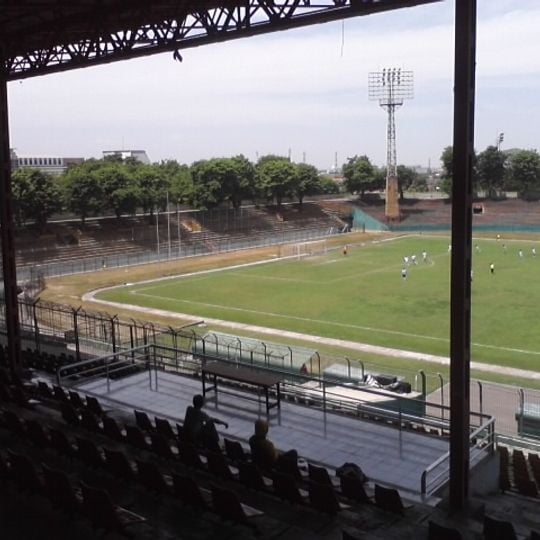
Gelora 10 November Stadium is a football ground in Tambaksari, Surabaya, with a flat grass pitch ringed by a low white line and fence. Tiered concrete seating rises on the left and rear sides under a dark roof, a tall metal floodlight tower stands beyond the right touchline, and a covered bench area sits on the near sideline. It holds 20,000 people.
Tambaksari Field hosted a mass rally on 13 September 1945 backing Indonesian independence, and in May 1932 it was the scene of unrest that led to the Battle of Surabaya. Persebaya took over the site in 1949; Ir. Tan Giok Tjiauw renovated it and Mayor Moestadjab Soemowidagdo inaugurated the stadium on 11 September 1954. It was renovated again for the 1969 National Games, when it took the name Gelora 10 November.
The name marks 10 November 1945, the start of the Battle of Surabaya, now Indonesian Heroes' Day. The ground itself was a rally site on 13 September 1945, when crowds gathered to defend the newly declared republic. Supporters of Persebaya, known as Bonek, remain the stadium's loudest regular presence.
The stadium stands in Tambaksari, Surabaya, at coordinates -7.25201, 112.75621. The field is bordered by a low fence, with tiered concrete seating on the left and rear sides and a covered bench area on the near sideline. Check the fixture list before travelling, since matches and events close parts of the ground.
The Pterocarpus indicus trees growing inside the stadium are noted in the sources as its best-known trait, unusual for a football ground. The venue also hosted Sepultura's Arise World Tour on 11 July 1992, and on 16 June 1983 Arsenal lost 2-0 there to local club NIAC Mitra.
The community of curious travelers
AroundUs brings together thousands of curated places, local tips, and hidden gems, enriched daily by 93,181 contributors worldwide.