Pettakere cave, Archaeological cave site in Bantimurung National Park, Indonesia.
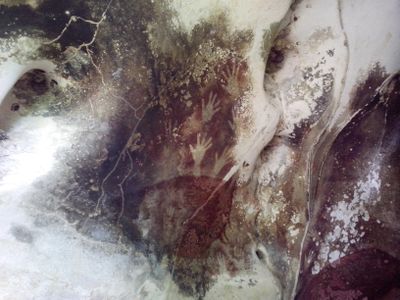
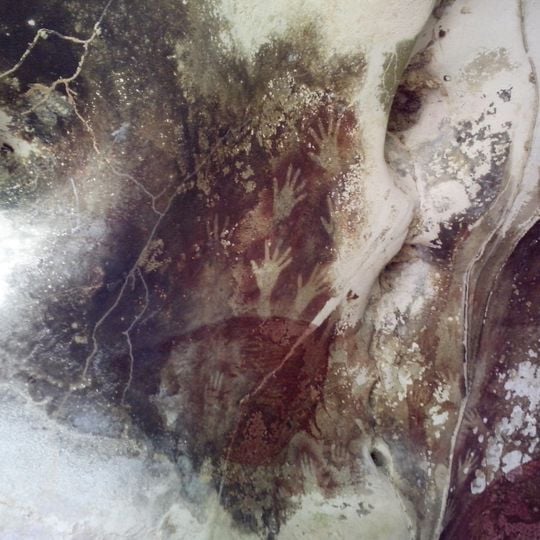
Pettakere is a limestone cave in Bantimurung-Bulusaraung National Park in Indonesia, known for its prehistoric rock paintings. The walls feature numerous hand prints and depictions of babirusas, a native wild pig species.
The rock paintings were created more than five millennia ago and were applied using red mineral pigments from the surrounding area. They date from pre-Austronesian times and belong to the oldest evidence of human settlement in the region.
Visitors can see the hand prints applied directly on the cave walls, which carried different meanings according to local understanding depending on their form. Some prints show all fingers, others only four, pointing to different occasions or messages.
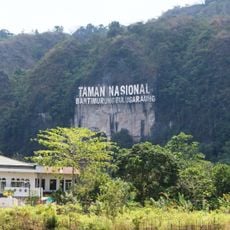
Access is via a path that winds through the national park and leads to the cave entrance. The temperature inside remains constant at around 27 degrees Celsius (80 degrees Fahrenheit), and humidity is high.
Archaeologists have found microliths and arrowheads on the cave floor, providing insight into the tools of the early inhabitants. The cave sits 45 meters (148 feet) above sea level and about 300 meters (984 feet) east of Leang Pettae cave.
The community of curious travelers
AroundUs brings together thousands of curated places, local tips, and hidden gems, enriched daily by 92,605 contributors worldwide.