Leang-Leang Cave, Prehistoric cave complex in Maros Regency, Indonesia.
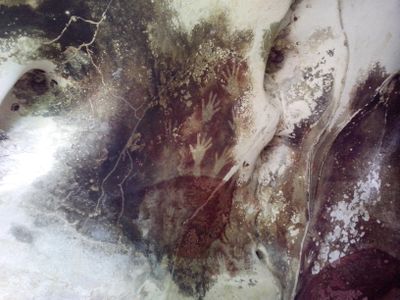
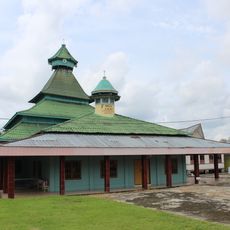
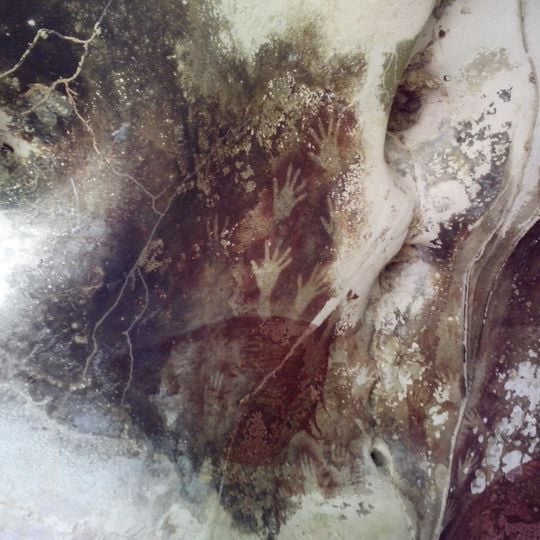
Leang-Leang is a prehistoric cave complex in Maros Regency, South Sulawesi, comprising two main caves, Leang Pettae and Leang Pettakere, set in a limestone karst formation. The walls bear reddish-brown handprints and a painting of a leaping babirusa pierced by an arrow. A river runs in front of the caves, and limestone outcrops dot the surrounding rice fields.
Archaeologists estimate that the caves were inhabited from about 50,000 BCE until 6,000 years ago, a span linked to the Toala Culture. In 1950 H.R. van Heekeren found a leaping babirusa with an arrow in its chest, and Heeren Palm found red hand stencils at Leang Pettae and Leang Pettakere. The site opened to visitors in 1980 as Taman Prasejarah Leang-Leang.
The cave paintings show stories of early inhabitants and the wild animals of the island, including the tusked deer-pigs with their curved fangs. Visitors can see these ancient scenes on the cave walls today and understand how people thousands of years ago perceived and depicted their surroundings.
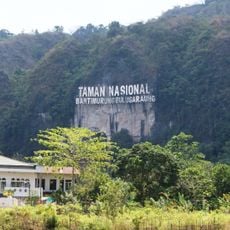
The park lies in the Maros-Pangkep karst, about 19.9 km from Sultan Hasanuddin International Airport and 34.9 km north of Makassar. From the Bantimurung main road, turn left at kilometre 7 and follow the concreted Jalan Poros Leang-Leang north for 15 to 30 minutes. The two main caves, Leang Pettae and Leang Pettakere, stand close together in one managed area.
Researchers discovered child-sized hand prints among the wall paintings, created by spraying pigment directly from the mouth around the hand placed on the wall. This technique shows that even the youngest members of the community took part in creating the cave art.
The community of curious travelers
AroundUs brings together thousands of curated places, local tips, and hidden gems, enriched daily by 93,369 contributors worldwide.