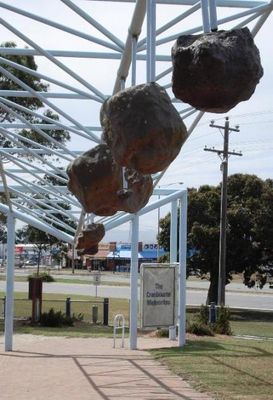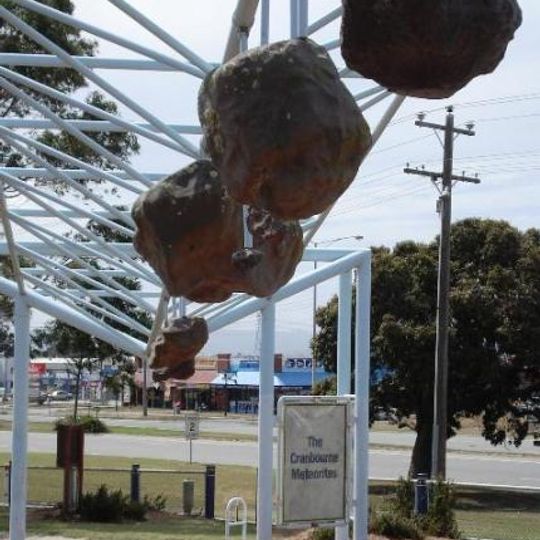
Cranbourne meteorite, Large meteorite cluster in Devon Meadows, Victoria, Australia.
The Cranbourne meteorite is a large meteorite cluster in Devon Meadows, Victoria, consisting of thirteen fragments ranging from 23 to 3,550 kilograms. These pieces are spread across a 25-kilometer strewnfield between Pearcedale and Pakenham in southeastern Victoria.
The first fragment was discovered in 1853 and held the record as the largest iron meteorite in the world at that time, before additional pieces were found between 1853 and 2008. These discoveries revealed that the original piece was part of a much larger shower.
The Bunurong Aboriginal people performed ceremonies near these stone fragments and created sounds by striking them with stone tools before European settlement. This practice was part of their spiritual and social connection to the land.
The main fragments are displayed at the Natural History Museum in London and the Melbourne Museum, allowing visitors to see them up close. Visiting both museums provides the chance to compare the different pieces and learn about their scientific importance.
These meteorites contain such high iron concentrations that they are extremely dense and were initially mistaken for tree stumps by early settlers. This confusion delayed their recognition and made later discoveries all the more surprising.
The community of curious travelers
AroundUs brings together thousands of curated places, local tips, and hidden gems, enriched daily by 91,957 contributors worldwide.