Mount Bogong, Mountain summit in Alpine National Park, Australia
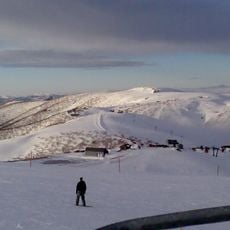
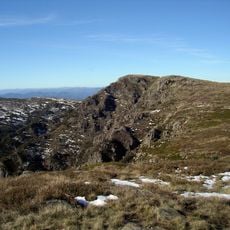
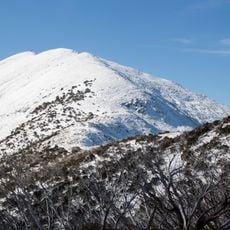
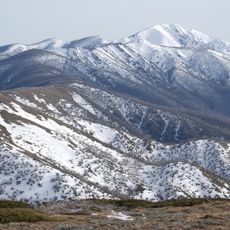
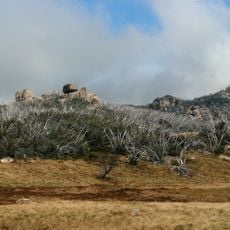
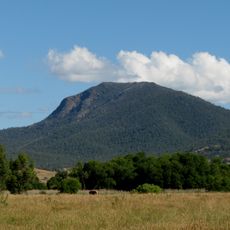
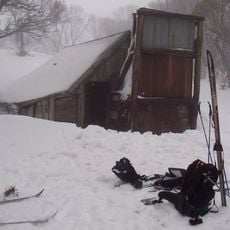
Mount Bogong is the highest mountain in Victoria, rising to 1,986 metres above sea level in the Alpine National Park. Its lower slopes carry tall alpine ash forest up to about 1,300 metres, then snow gum woodland to 1,800 metres, and above that alpine shrubland, grassland and herbfield. The summit is a broad, rounded high point of dark metamorphic rock and soil with patchy low vegetation, and the mountain rises 1,650 metres from the Kiewa River valley floor.
Baron Ferdinand von Mueller made the first recorded European ascent in 1854, beginning exploration of the peak by outsiders. The mountain later became increasingly popular with walkers and climbers during the 20th century.
In the Waywurru and Dhudhuroa languages the mountain is Warkwoolowler, "the mountain where Aboriginal people collected the boo.gong fly"; in Dhudhuroa bugung means the brown moth Agrotis infusa. Tribes from as far as the coast and south-west slopes met here in summer for ceremonies and feasting on bogong moths, exchanging objects and tool materials. The Yiatmathong controlled the Kiewa and Mitta Mitta valleys and had to grant permission to other tribes to join the feast.
The Staircase Spur is the most popular route and demands good physical condition along with weather-appropriate equipment for exposed summit conditions. Visitors should be prepared for changeable weather and bring protective clothing for the ridge.
Bogong moths gather by the thousands in caves on the mountain to escape summer heat and dryness, a behaviour that drew Aboriginal groups from as far as the coast and south-west slopes each season. The moths were roasted and eaten during intertribal ceremonies, and the Dhudhuroa word Bugung means the brown moth.
The community of curious travelers
AroundUs brings together thousands of curated places, local tips, and hidden gems, enriched daily by 93,389 contributors worldwide.