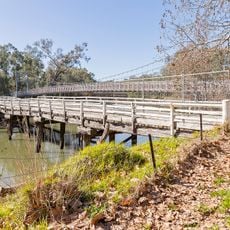
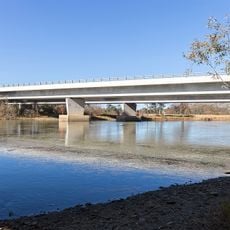
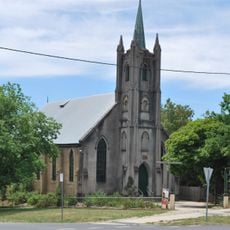
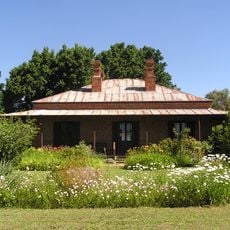
Hume Dam, Dam on the Murray River in the Riverina region, New South Wales, Australia
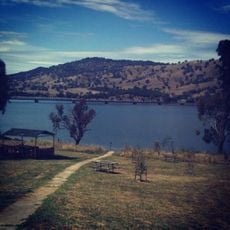
Hume Dam is a large dam that holds back the Murray River and creates an enormous reservoir stretching across the landscape. The structure combines concrete sections with earthen embankments to contain water that serves multiple purposes across the region.
The dam was built between 1919 and 1936 and was the largest project of its kind in the Southern Hemisphere at that time. Thousands of workers took part in the construction and shaped the region's infrastructure for generations to come.
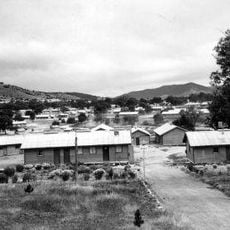
The dam's name honours Hamilton Hume, who with William Hovell crossed the Murray River in 1824; the reservoir was called Hume Reservoir in 1920 and became Lake Hume in the mid-1980s. The towns of Tallangatta, Bonegilla and Bellbridge sit on the lake's shores, and Tallangatta was moved 8 kilometres west when the wall was raised.
The best time to visit is early in the day when there are fewer visitors and the view across the water is clearest. Access to the dam is straightforward, and there are lookout points from which you can see the entire structure and surrounding area.
The Hume Power Station, completed in 1957 at a cost of A£2.1 million, sits inside the dam wall and is used mainly for peak-load generation, averaging 220 gigawatt-hours a year. Its two turbines were upgraded to 29-megawatt Kaplan units in 2000, and power runs to Albury by a 132-kV line and to Wodonga by a 66-kV line.
The community of curious travelers
AroundUs brings together thousands of curated places, local tips, and hidden gems, enriched daily by 93,390 contributors worldwide.