Wellington Cenotaph, War memorial in Wellington, New Zealand.
The Wellington Cenotaph stands at the intersection of Lambton Quay and Bowen Street, featuring a granite base, marble viewing room, and bronze statuary. The structure was designed by architect Richard Gross in collaboration with the firm Aimer, Draffin, and Grierson.
The memorial was built between 1929 and 1931, during a period of global reflection on the consequences of the First World War. Its construction shaped Wellington's identity in the 20th century as a place to honor those lost in conflict.
The central bronze figure represents The Will to Peace, showing Pegasus rising toward the heavens while rejecting war artifacts below. This imagery shapes how visitors experience the memorial and its message of hope overcoming conflict.
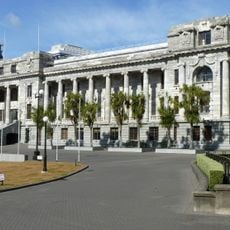
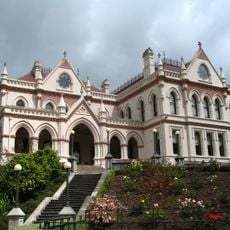
The memorial sits at the corner of Lambton Quay and Bowen Street, a short walk from the Parliament Buildings. A staircase and water feature link the precinct up towards Parliament, forming a ceremonial square. Anzac Day ceremonies are held here each 25 April, and the city began a three-year restoration programme in 2025.
The 2013 redevelopment added Joe Sheehan's Walk the Line: 231 nephrite discs set into the paving along the buried course of the Waipiro Stream, which once ran down Bowen Street to the shore. Speakers beneath the ground play water sounds recorded on Te Ahumairangi Hill, whose streams feed the Waipiro.
The community of curious travelers
AroundUs brings together thousands of curated places, local tips, and hidden gems, enriched daily by 93,432 contributors worldwide.