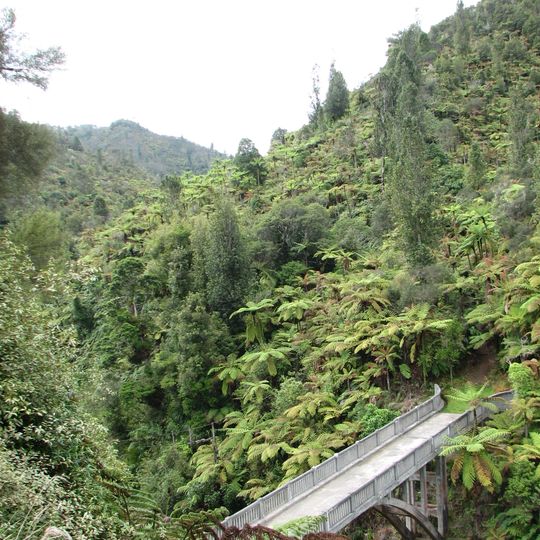
Bridge to Nowhere, Heritage footbridge in Whanganui National Park, New Zealand
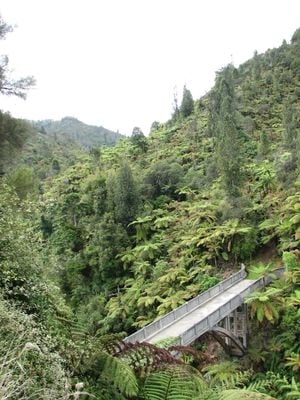
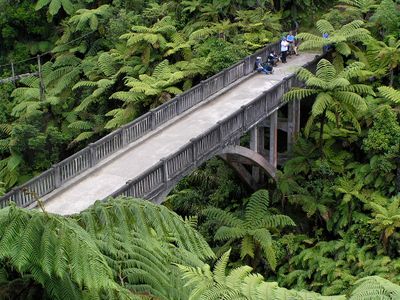
Bridge to Nowhere is a reinforced concrete arch structure that spans the Mangapurua Stream deep within the dense forest of Whanganui National Park. The 40-meter crossing rises from the streambed and connects two banks in a remote location where vegetation now dominates the surrounding landscape.
The bridge was constructed in 1936 to provide access to land parcels granted to soldiers returning from World War I. However, farming operations ceased by 1942 when settlers found the isolated conditions and difficult terrain unsustainable for permanent settlement.
The structure represents the determination of New Zealand's early pioneers and serves as a testament to the challenges faced by returned servicemen after World War I.
Visitors can reach this crossing on foot through a walking track from Mangapurua Landing, which requires jet boat transport to access from the main highway. The forest path is well-marked and takes several hours depending on pace and fitness level.
The structure stands in complete isolation with no connecting roads on either side, as efforts to permanently settle the surrounding land ultimately failed. This remoteness makes the spot a puzzling remnant of an unrealized settlement.
The community of curious travelers
AroundUs brings together thousands of curated places, local tips, and hidden gems, enriched daily by 90,878 contributors worldwide.