Waitomo Glowworm Caves, Show cave in Waitomo, New Zealand
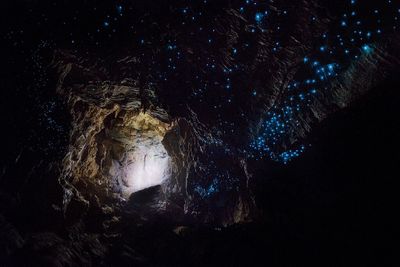
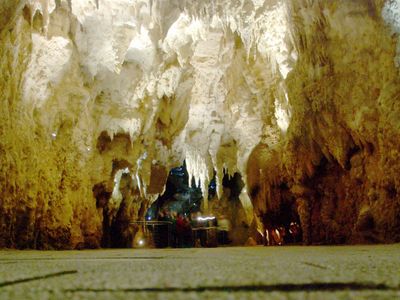
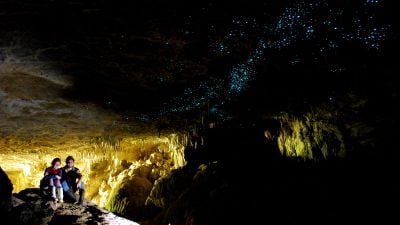
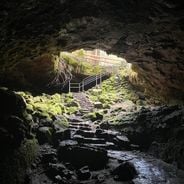
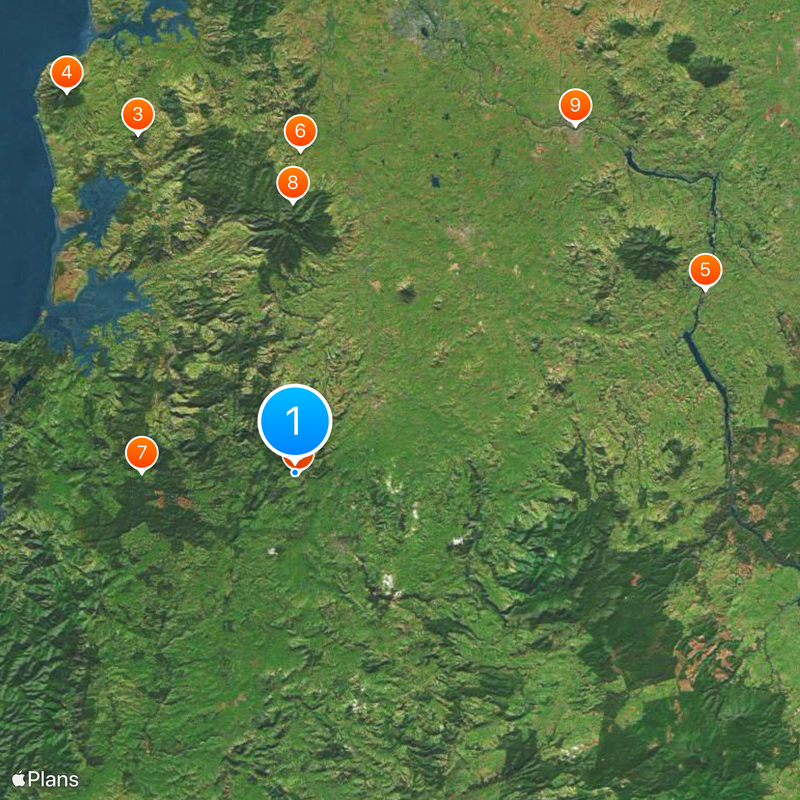
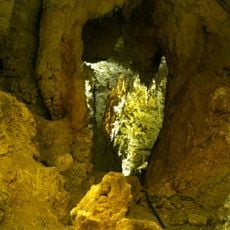
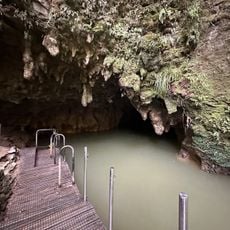
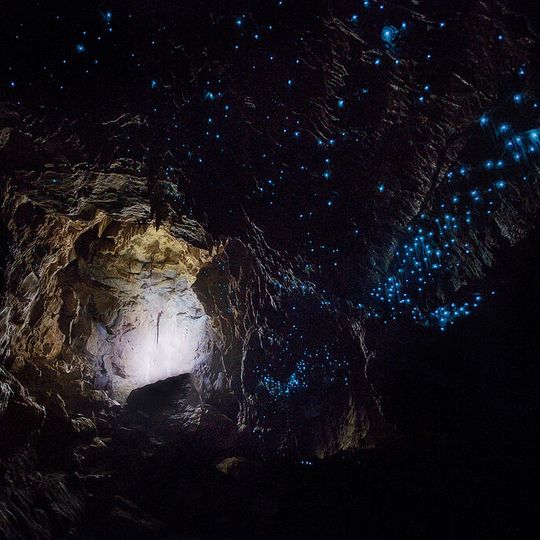
The limestone formation extends through three levels and contains deep shafts, underground rivers, and thousands of luminescent larvae attached to ceilings. Multiple interconnected chambers feature varying water levels, with glowworms forming dense colonies that resemble a starry sky, casting blue light throughout the darkness of the subterranean passages.
In 1887, local Māori chief Tane Tinorau and English surveyor Fred Mace first explored the system using candlelight and rafts through underground waterways. The site opened to visitors in 1889, with the Tinorau family conducting early tours, and was returned to government control in 1989, which continues to operate it in partnership with Māori descendants.
The name derives from Māori language, where 'wai' means water and 'tomo' means hole, reflecting formation through water erosion. The caves sit on land traditionally owned by Māori people, and descendants of chief Tane Tinorau have managed them for generations, maintaining a strong connection between the indigenous community and this natural site.
Access occurs through guided tours lasting approximately 45 minutes, which include walking through illuminated sections followed by silent boat rides in complete darkness to observe glowworms on ceilings. Photography is prohibited inside to protect larvae, and temperatures remain around 52 degrees Fahrenheit (11 degrees Celsius) year-round, so bringing warm clothing is advisable.
The Arachnocampa luminosa species creates silk threads from ceilings to catch prey, using bioluminescence as a natural hunting mechanism. Each larva can spend up to nine months in this luminescent stage before pupating, and individual threads can contain dozens of sticky droplets that trap unsuspecting insects attracted to the blue-green light produced by chemical reactions within their bodies.
GPS coordinates: -38.26080,175.10360
Latest update: November 27, 2025 20:57
This collection presents geological formations created through natural processes over millions of years. From layered sandstone waves in Arizona to volcanic basalt columns in Northern Ireland, these locations demonstrate Earth's geological diversity. Erosion, tectonic activity, and mineral deposits have shaped landscapes that provide insights into our planet's history. The selection includes limestone caves in New Zealand with glowworms, thermal springs in Turkey with travertine terraces, and colored rock formations in China created by iron-rich minerals. Visitors will find glacier caves in Iceland, canyons in Utah, and salt pans in Namibia. Each location documents specific geological processes and offers opportunities to explore different rock formations and natural phenomena.
Caves form through gradual geological processes that can span millions of years. Water dissolves limestone and creates underground chambers filled with stalactites and stalagmites, while ice caves in alpine regions maintain their frozen formations even during summer months. Each cave system tells a distinct story about the forces that shaped it, from chemical erosion to tectonic shifts that exposed new rock layers to underground rivers. This collection includes some of the most geologically significant caves on Earth. Carlsbad Caverns in New Mexico encompasses more than 30 miles (48 kilometers) of passages filled with mineral formations, while Mammoth Cave in Kentucky extends over 400 miles (650 kilometers) through limestone bedrock. Eisriesenwelt in Austria stretches 26 miles (42 kilometers) and contains ice structures that reform each winter. Reed Flute Cave in Guilin showcases limestone formations that began developing 180 million years ago. Waitomo Caves in New Zealand are home to thousands of glowworms that light the darkness with bioluminescence. Puerto Princesa in the Philippines features an underground river that flows 5 miles (8 kilometers) before reaching the sea. Several caves also preserve human history, including Lascaux in France with its 17,000-year-old paintings. These formations demonstrate how water, ice, and time create underground worlds that reveal both geological and cultural history.
This collection brings together locations that challenge the norms of conventional tourism. It offers the chance to discover places where nature, history, and human activities have created astonishing sites: a complex of 732 unfinished villas in Turkey, a Mexican island where hundreds of dolls are hung in trees, a Canadian lake with mineral-formed multicolored basins, and a Polish forest of 400 pines with mysteriously bent trunks facing north. The route also includes unique human-made creations, such as an art installation representing an isolated Prada store in the Texas desert, or the Japanese village of Nagoro where an artist populated the streets with 350 dolls after the residents left. Geological phenomena are also featured, including Darvaza crater in Turkmenistan, which has been burning continuously since 1971, the Great Blue Hole in Belize, a 124-meter-deep underwater cavity, and Colombia’s Caño Cristales river that changes color to red, yellow, and green from July to November. These destinations provide a different perspective on our planet and invite exploration of lesser-known facets of our world.
This collection leads to places that remain outside standard tourist circuits. The selection includes natural landscapes and cultural sites that receive limited attention from international visitors. From the salt flats of Bolivia to ancient ruins in Turkish mountain terrain and the ice formations of Lake Baikal, the collection provides access to less frequented regions. Natural phenomena include the Benagil Cave along Portugal's Algarve coast, the Great Blue Hole off Belize, and the sandstone formations of The Wave in Arizona. Cultural sites such as Quinta da Regaleira near Lisbon, the abandoned nitrate town of Humberstone in Chile, and the fortified Berber village of Ait Benhaddou in Morocco show historical building methods and past ways of life. The Meteora monasteries in Greece and the Waitomo glowworm caves in New Zealand demonstrate the connection between human settlement and natural environment. The locations span all continents and climate zones. They range from tropical regions like the turquoise river at Hinatuan in the Philippines, through temperate zones like the Cinchado rock formation on Tenerife, to remote areas such as Pangong Lake in Indian Ladakh and the limestone pinnacles of Tsingy de Bemaraha in Madagascar. The collection allows travelers to experience regional characteristics without commercial tourism infrastructure.
Earth presents numerous geological formations, natural phenomena, and architectural structures that stand out through their exceptional characteristics. This collection documents such sites across all continents: the Darvaza Gas Crater in Turkmenistan, burning for decades; the luminescent glowworms in New Zealand's Waitomo Caves; the terraced limestone pools of Pamukkale in Turkey; and the layered sediment patterns of The Wave in Arizona. Additional locations include the basalt columns at Bushmills in Northern Ireland, the deep blue expanse of Aokigahara Forest at the base of Mount Fuji, the Chocolate Hills in the Philippines with their conical mounds, and the acidic turquoise waters of Kawah Ijen crater lake in Indonesia. The collection also features human-made curiosities such as Quinta da Regaleira in Sintra with its spiral initiation well, the Winchester Mystery House in California with its unusual architecture, and Las Pozas in Mexico, a surrealist garden of concrete constructions in the jungle. Natural phenomena are equally represented: the Racetrack Playa in California with its moving rocks, the optical illusion of Magnetic Hill in New Brunswick, the Caño Cristales in Colombia whose riverbed appears in bright colors, and Lake Natron in Tanzania with its high alkaline content. Each location demonstrates specific geological processes, climatic conditions, or cultural developments that distinguish these places from typical travel destinations.
Waitomo Caves Hotel
262 m
Wairēinga / Bridal Veil Falls
43.2 km
Karioi
51.4 km
Arapuni Suspension Bridge
51.9 km
Toothbrush fence
37.2 km
Mangapohue Natural Bridge
17.7 km
Pirongia Forest Park
31.3 km
Victoria Bridge
51.7 km
Waiteti Viaduct
13.3 km
Marokopa Falls
22 km
Lake Waipapa
50.7 km
Tawarau Conservation Area
21 km
Tawarau Falls
15.3 km
Cambridge Town Hall
52 km
Alpha Hotel
32.9 km
World War One Memorial
12.8 km
Paemako Scenic Reserve
30 km
World War One Memorial
33.8 km
Cambridge War Memorial
52 km
National Hotel
52 km
Rangitoto Range
29.5 km
Cambridge Post Office
51.8 km
Band Rotunda
51.5 km
Cambridge Water Tower
51.5 km
World War One Memorial
32.7 km
Town Hall
32.6 km
Clock Tower
51.9 km
Arnold House
51.2 kmReviews
Visited this place? Tap the stars to rate it and share your experience / photos with the community! Try now! You can cancel it anytime.
Discover hidden gems everywhere you go!
From secret cafés to breathtaking viewpoints, skip the crowded tourist spots and find places that match your style. Our app makes it easy with voice search, smart filtering, route optimization, and insider tips from travelers worldwide. Download now for the complete mobile experience.
A unique approach to discovering new places❞
— Le Figaro
All the places worth exploring❞
— France Info
A tailor-made excursion in just a few clicks❞
— 20 Minutes