Lake Mungo, Ancient dry lake in New South Wales, Australia
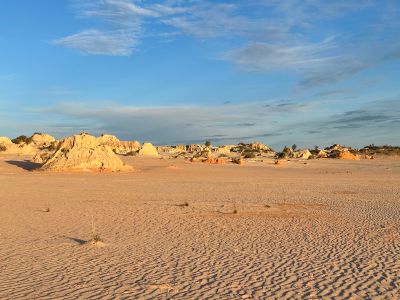
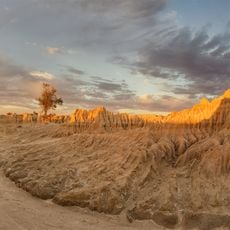
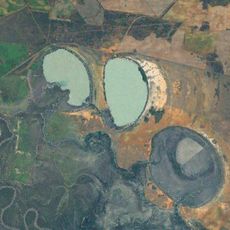
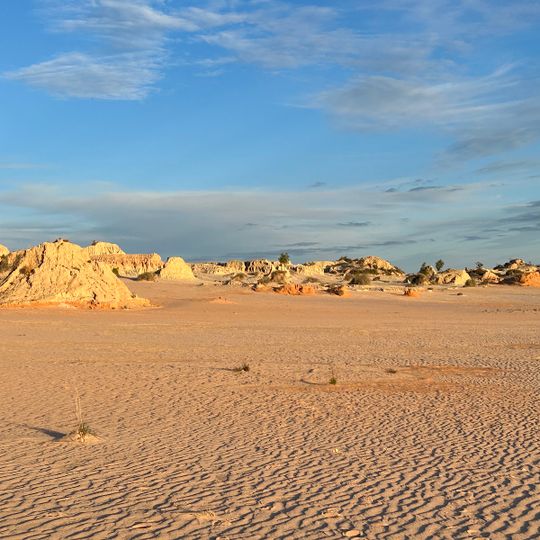
Lake Mungo is a dry lake bed in Mungo National Park, southwestern New South Wales. Its eastern shore is lined by the Walls of China, crescent-shaped sand dunes up to 40 m high that run for more than 33 km. The dunes show five layers of sand and soil, from the reddish Gol Gol layer to the pale brown Zanci layer.
People reached the lake about 50,000 years ago and lived on emus, marsupials, fish and freshwater mussels. Mungo Lady, found in 1969, is the world's oldest known cremation; Mungo Man, found in 1974, is Australia's oldest human remains, both dated to about 40,000 years. European settlers took the land for grazing in the 1840s, and in the 1920s returned soldiers were given subdivided blocks at Gol-Gol station.
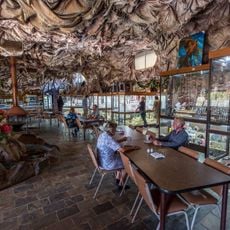
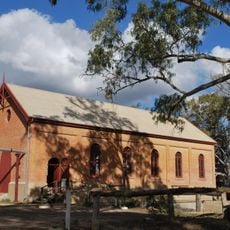
The lake lies on the traditional land of the Paakantyi, Muthi Muthi and Ngiyampaa peoples, whose ancestors reached the area about 50,000 years ago and ate emus, marsupials, freshwater mussels and fish. After the First Fleet brought smallpox in 1788, survivors of the seizure of their country were moved to a mission at Balranald. The 45-m Mungo woolshed was built by Chinese labourers in 1869.
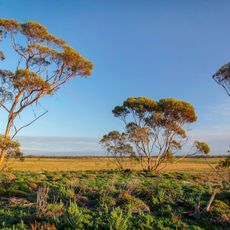
The lake lies about 90 km north-east of Mildura, the nearest town with an airport. The Walls of China stretch for more than 33 km along the eastern shore, where a mobile sand dune keeps moving east. Carry plenty of water; the ground is dry and open with little shade.
The lake gives its name to the Lake Mungo geomagnetic excursion, identified in its sediments and the first convincing evidence that such reversals are a geomagnetic phenomenon rather than a sedimentary one. The site also holds the 45-metre Mungo woolshed, built by Chinese labourers in 1869.
The community of curious travelers
AroundUs brings together thousands of curated places, local tips, and hidden gems, enriched daily by 93,468 contributors worldwide.