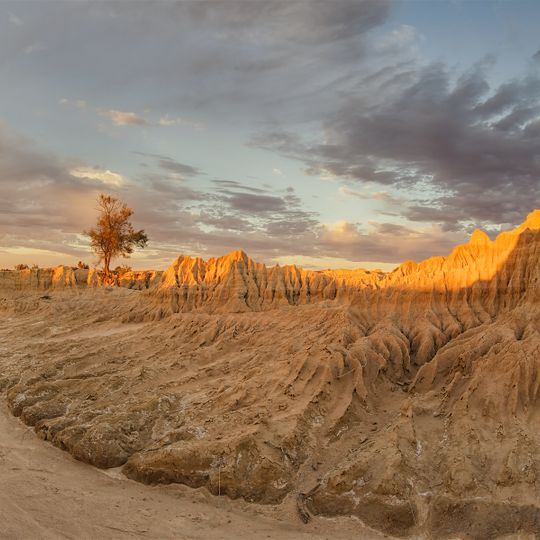
Mungo National Park, Archaeological national park in New South Wales, Australia
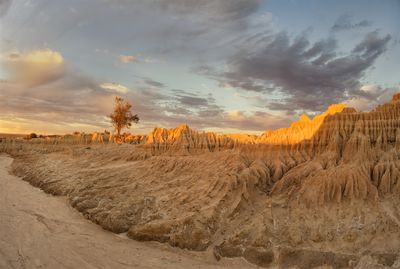
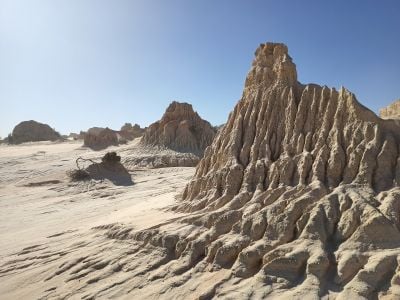
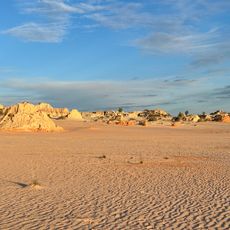
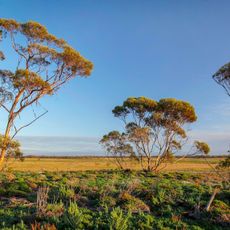
Mungo National Park is a national park in southern New South Wales containing ancient dry lake beds, sand dunes, and eroded limestone formations shaped over thousands of years. The Walls of China, a striking ridge of reddish-brown sand, forms the most distinctive feature visitors encounter throughout the reserve.
Archaeological excavations beginning in 1969 uncovered skeletal remains of Mungo Lady and Mungo Man, preserved in lake sediments dating back more than 42,000 years. These discoveries established the site as one of Australia's oldest known burial places and evidence of continuous human occupation in the region.
Three Aboriginal groups—the Paakantji, Ngyiampaa, and Mutthi Mutthi—maintain living connections to this land through ceremonies and shared knowledge passed down through generations. Visitors can encounter their perspectives and stories woven throughout the park's interpretation and guided experiences.
The Visit Centre offers interpretative displays and can arrange guided tours, particularly to view the Walls of China formation and accessible walking routes around the park. Visitors should prepare for open landscapes with limited shade and bring sufficient water for any exploration during the day.
Preserved footprints from 20,000 years ago reveal activities of children and adults hunting together on the muddy shores of the ancient lake bed. These rare impressions offer insight into daily routines and family group behavior from the distant past.
The community of curious travelers
AroundUs brings together thousands of curated places, local tips, and hidden gems, enriched daily by 91,771 contributors worldwide.